
Questions
What parents and teachers ask us.
Choosing, using, washing, shipping, and buying for a classroom. If your question is not here, a person will answer it.
Browse by topic
Choosing a tool
What to start from, and what these tools are not.
How do I know which tool is right for my child?
Start with what their body reaches for rather than what you want the behaviour to become. Children who press into furniture, climb, or lean tend to respond to weight. Children who chew, pick, or tap tend to want something to hold and squeeze. Children who hold their breath or get loud often do better with a breath they can see.
The three-question tool asks what the moment looks like and suggests one thing to try. It is a starting point, not an assessment. Find your tool.
What ages are these for?
Ages 3 to 12 is the recommended range across the tools, except Flutter the weighted dragonfly, which is for ages 4 to 12. Within that, size and supervision matter more than the number — what counts is whether a child can hold, place, and put down the tool themselves. Exact guidance is published on each product page.
How heavy are the weighted tools?
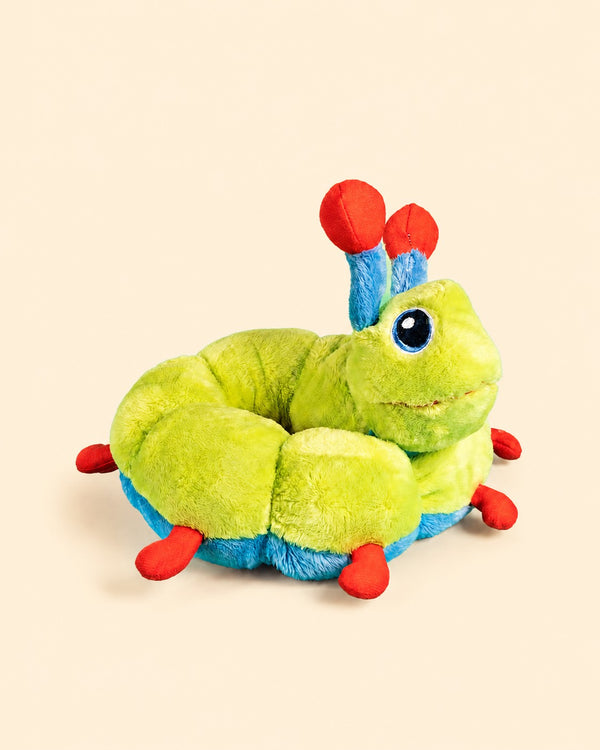
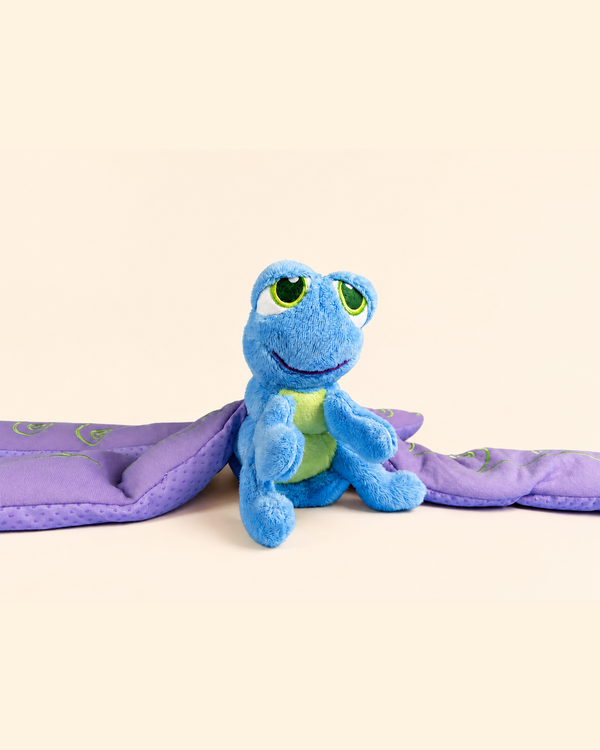
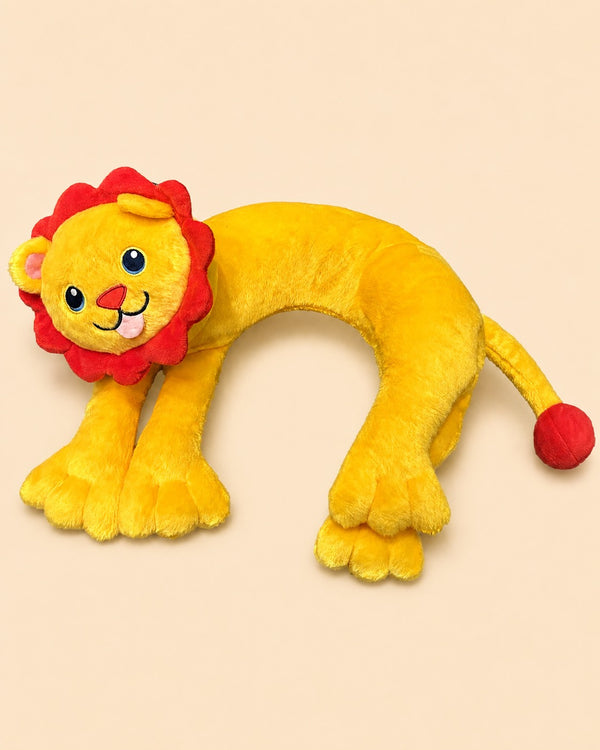
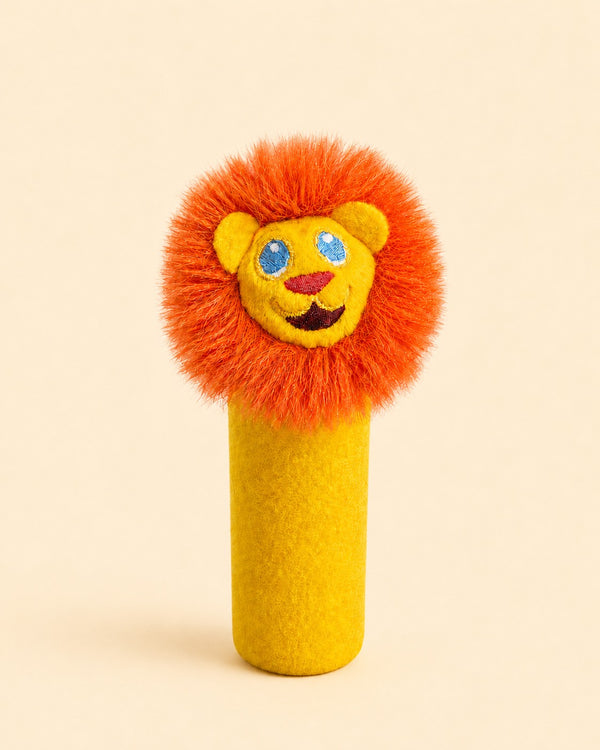
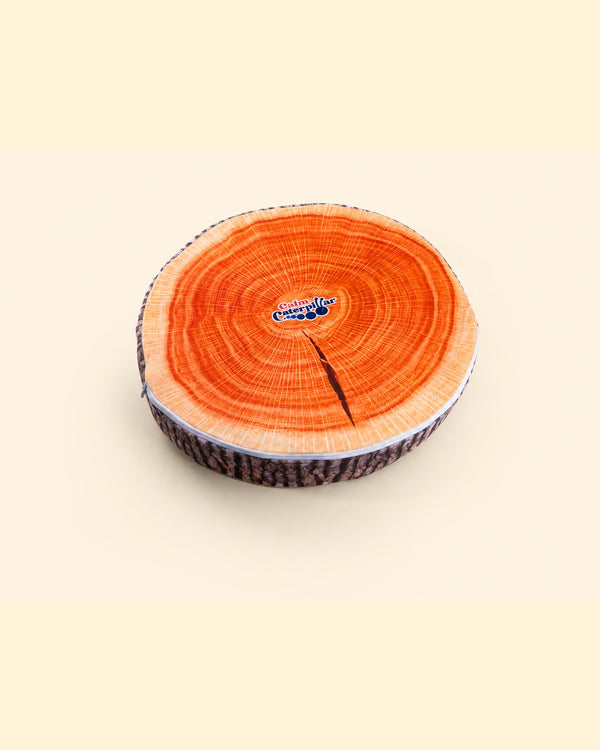
Flutter is the only weighted product we make. Everything else — Calmee, Bloomie, Buzzee, Rory, Rory Junior, Stumpy — is unweighted.
Weighted tools work by giving steady, predictable pressure a child chooses and can remove at any time. Nothing straps on, wraps closed, or restricts movement. See Flutter.
Are these for autistic or ADHD children specifically?
They are for any child in a hard moment. Many of our customers are autistic and ADHD children and their families, and many are not.
These are sensory tools, not medical devices, and not a treatment. If a child works with an occupational therapist, bring the tool into that conversation rather than replacing it.
Using the tools
Introducing a tool, and making it work in a shared room.
My child ignored it. What now?
Offer it before the hard moment, not during it. A tool introduced mid-meltdown is one more demand. Leave it somewhere reachable, use it yourself, and let them come to it.
Choice matters more than compliance. A tool a child picks up on their own gets used again. Read how it works.
Care and safety
Washing, materials, and independent testing.
How do I wash it?
Care differs by product, so check the page for the tool you own. Calmee and Rory can be washed and laid flat to dry — with Rory, take the sound box out first. Everything else is spot clean with a damp cloth.
Are the products safety tested?
Every Calm Caterpillar plush is independently tested by a CPSC-accepted third-party laboratory and certified to meet or exceed U.S. federal toy safety standards, including ASTM F963, the Standard Consumer Safety Specification for Toy Safety.
Testing covers lead and heavy metals, small parts and choking hazards, flammability, and material quality and construction — seams, stuffing, and attached components under normal use, impact, pulling, and twisting. We hold a valid Children’s Product Certificate documenting compliance, and testing is conducted by an accredited independent laboratory, not by us.
The printed items — posters, cards, and manuals — are paper goods and are not part of toy safety testing. Full safety statement.
What are they made of?
Materials belong on each product page rather than in a general answer, because they differ by tool.
Shipping and returns
Where we ship, and what happens when something is wrong.
When will my order arrive?
Orders on this site are fulfilled in the United States. Australia, New Zealand, and Canada are served by local partners with their own shipping. See the Shipping Policy for processing times and delivery windows.
Do you ship outside the United States?
Not from this site. Jellystone Designs carries the range in Australia and New Zealand, and Nunu Toys carries it in Canada. See International shipping for links to both.
Can I return a tool?
All sales are final. We don’t accept returns or exchanges, except for manufacturing defects.
If you think a product has a manufacturing defect, email contact@thecalmcaterpillar.com within 5 days of delivery with your order number and a photo. Please don’t send anything back until we’ve approved it. Once approved, we replace the item (for a kit, usually just the affected piece) or refund it to your original payment method.
If an order arrives damaged, goes missing or isn’t what you ordered, see the Shipping Policy. Bought it from a retailer like Target? Their return policy applies instead of ours. Full terms: Refund Policy.
Schools and clinics
Purchase orders, bulk pricing, funding, and therapy settings.
Can my school pay by purchase order?
Yes. Schools, districts, clinics, and centers buy differently from families, so those orders run through a quote rather than the cart. Ask for a quote and we will invoice against your purchase order. Schools and districts.
Is there bulk or wholesale pricing?
Bulk pricing for classroom sets and wholesale for retailers are two separate routes. Ask us which one fits.
Can grant or district funds be used?
Yes. Districts fund calm corners through existing wellbeing, behaviour support, or classroom supply budgets, and grant programs that cover sensory materials can be used as well.
Tell us which funding route you are using and we will format the quote to match what your finance office needs.
Do you work with occupational therapists?
Yes. OTs, sensory gyms, and autism centers use the tools inside their own programs. Centers and sensory gyms.
The Calm Caterpillar Program
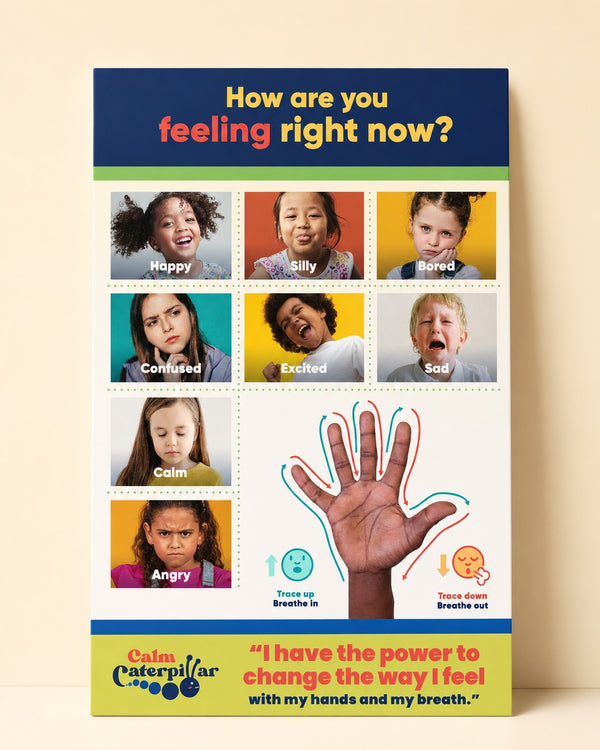
The school breathing program and its online parent class — separate from the plush tools above.
How do I access my online parent class?
There is a link to a private page in your confirmation email, shipping email, and follow-up educational email. If you have problems accessing it, please email us at contact@thecalmcaterpillar.com.
See the free parent class page.
What proof is there that the Calm Caterpillar Program works?
This program is backed by 5+ years of school-based programming. Calm Caterpillar techniques have been used by Cincinnati Public Schools, with over 10,000 students benefiting from the program. We have used this program in over 44 schools, and hundreds of teachers have told us that classroom disruptions go way down after introducing breathing techniques into the classroom.
Additionally, the University of Cincinnati, School of Education and Criminal Justice, Evaluation Services Center conducted a study on the program in Cincinnati Public Schools. Their stated result is that “students demonstrated significant improvement in Difficulties scores (particularly Conduct Problems) and teacher ratings of Prosocial Behaviors and Social Competence relative to control students.”
Still deciding? Ask a person.
Tell us what the hard moment looks like and we will tell you which tool tends to fit — including when the answer is none of them yet.