

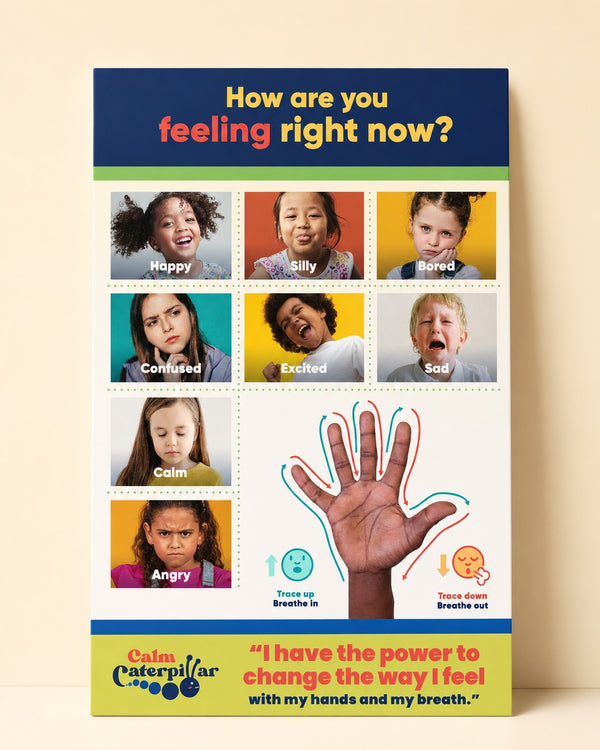
Sensory seeking

Regulation tools for sensory seekers

Some children need more input than the day gives them. They crash, climb, chew, squeeze, spin, and press — not to be difficult, but because their body is looking for something.

This page is for the parent who just found the words for it. Start with the list below and see how much of it sounds like your kid.

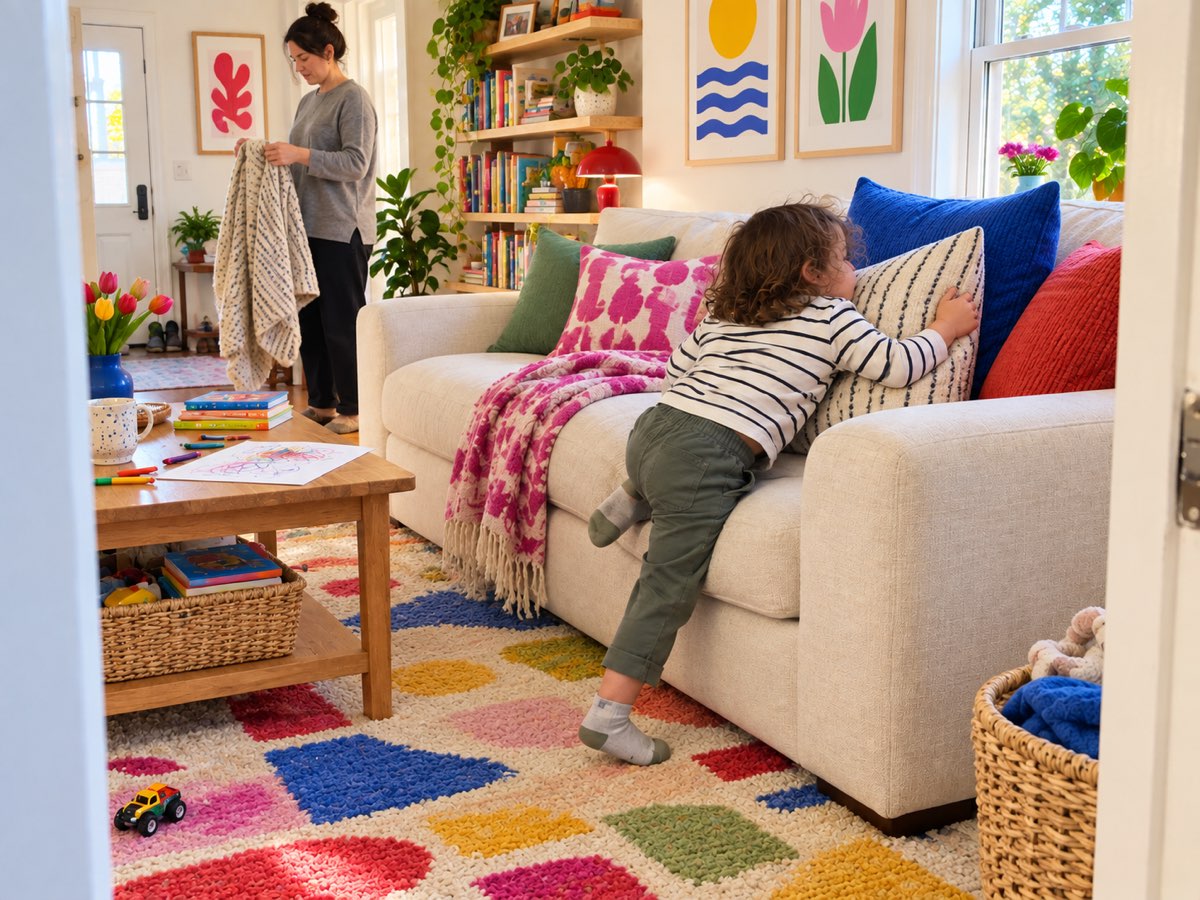
A child climbing over the arm of a sofa into the cushions while a parent folds a blanket in the next room.

Things parents tell us

Is this my kid?

  1. Deep pressure input

    “She presses her feet into you constantly.”

  2. Proprioceptive input

    “He crashes into the couch, over and over.”

  3. Oral input

    “She chews her sleeves until they are wet.”

  4. Proprioceptive input

    “He hangs off me, climbs me, headbutts me when he is excited.”

  5. Deep pressure input

    “She squeezes into tight spaces — under the table, behind the sofa.”

  6. Vestibular input

    “He spins until he falls over, then gets up and spins again.”

  7. Tactile input

    “She touches every surface she walks past.”

  8. Auditory and oral input

    “He hums, shouts, and makes noise all day long.”

If you read that list nodding

Your child is a sensory seeker.

It is not a diagnosis and it is not a phase to wait out. It is a description of what a body is asking for, and it can be answered.

What sensory seeking actually is

Every body takes in information about pressure, movement, touch, sound, and where it is in space. Some children register that information faintly, so they go looking for more of it. Crashing, chewing, squeezing, spinning, and pressing are how they turn the volume up until their body can feel where it is.

Worth knowing

Seeking and avoiding can live in the same child

The same child who body-slams the sofa may cover their ears in a supermarket. Both are real at once.

Not a diagnosis

Sensory seeking is a description, not a condition

If you want it looked at properly, an occupational therapist who knows your child is the person to ask.

Timing

Input works best before the hard part of the day

Not as a repair afterwards. Movement before school beats movement after the meltdown.

Given nothing to seek, children find it anyway — on the furniture, on their sleeves, on you. Given something to seek on purpose, the same need costs everyone less. The seeking is not the problem to solve. The lack of an outlet is.

Input type

Deep pressure and proprioception

For the child who crashes, climbs, squeezes into gaps, presses their feet into you, and leans their whole weight on whatever is nearest.
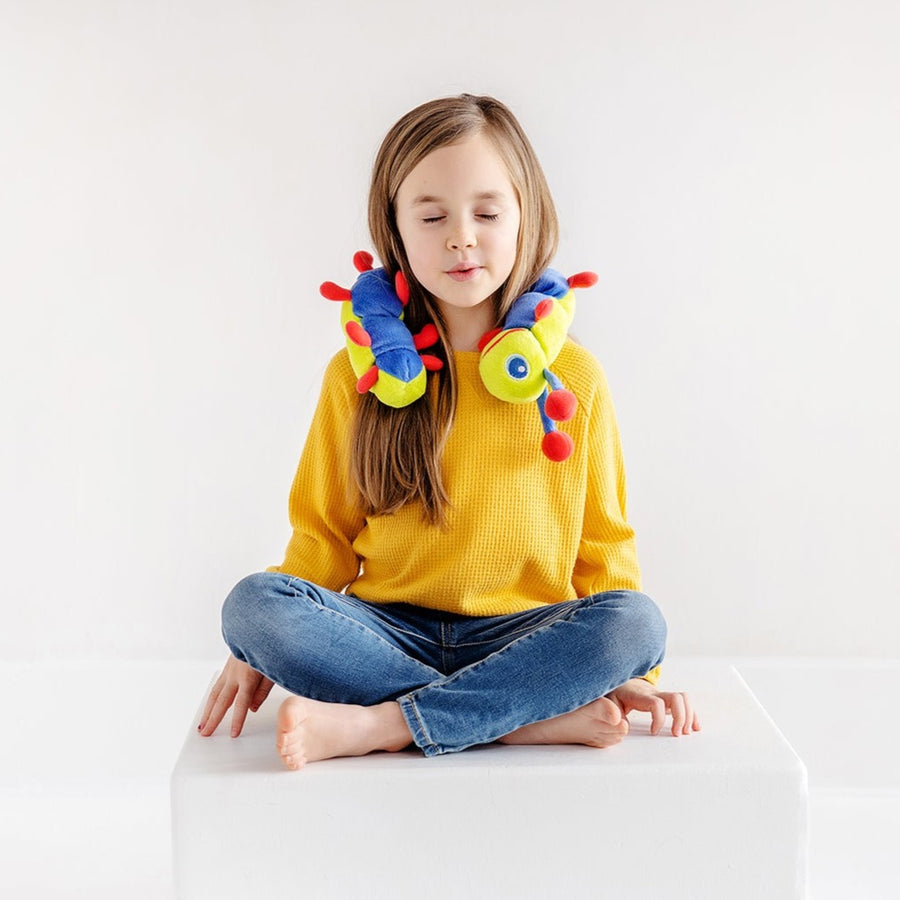
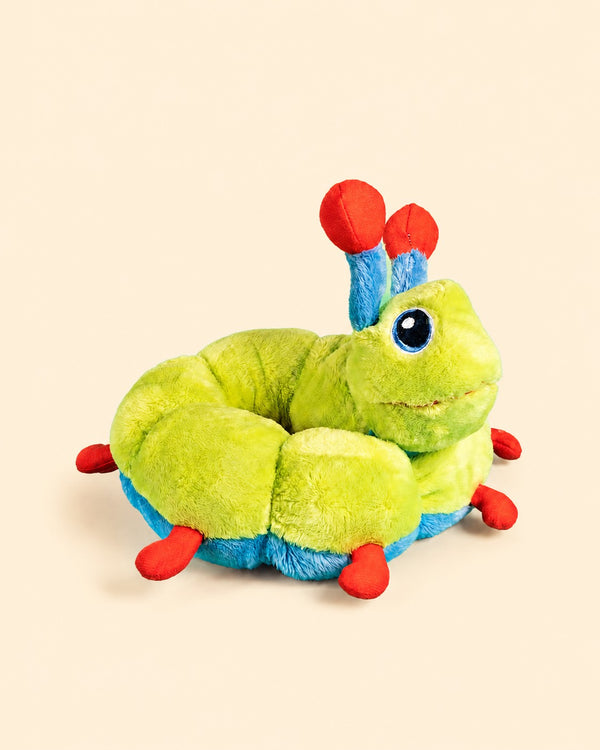
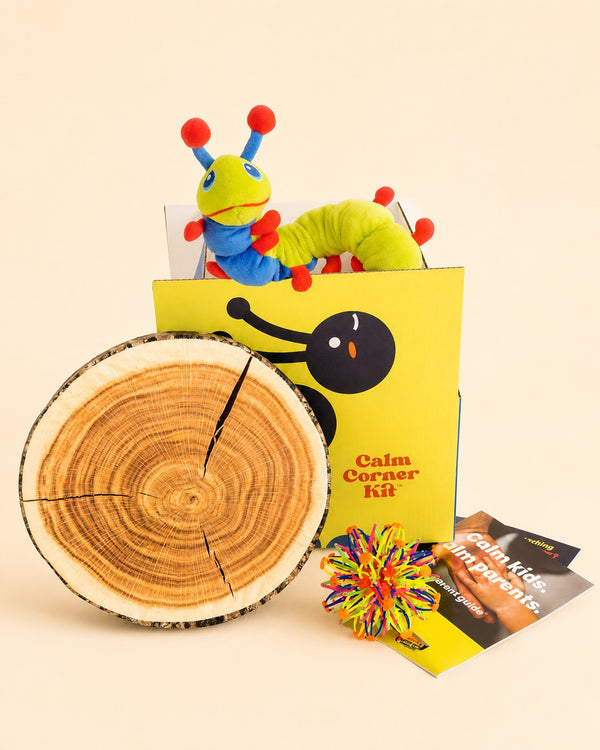
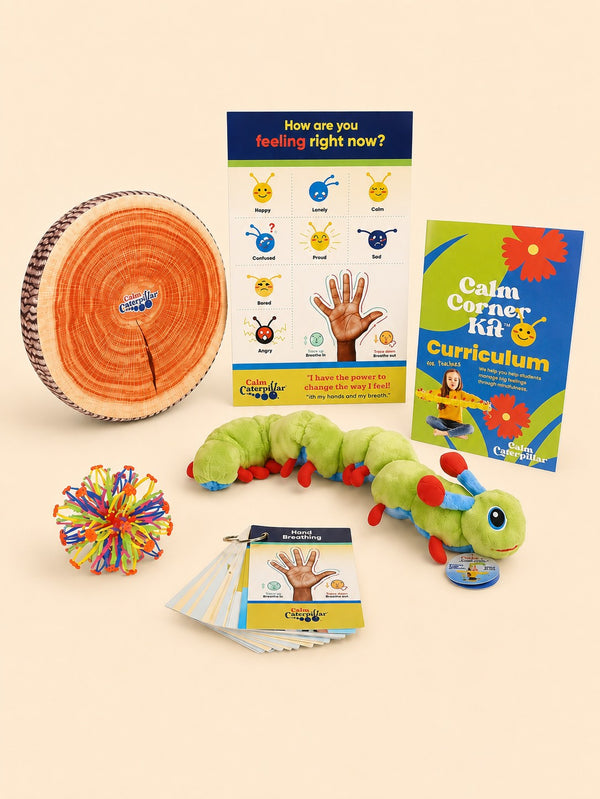
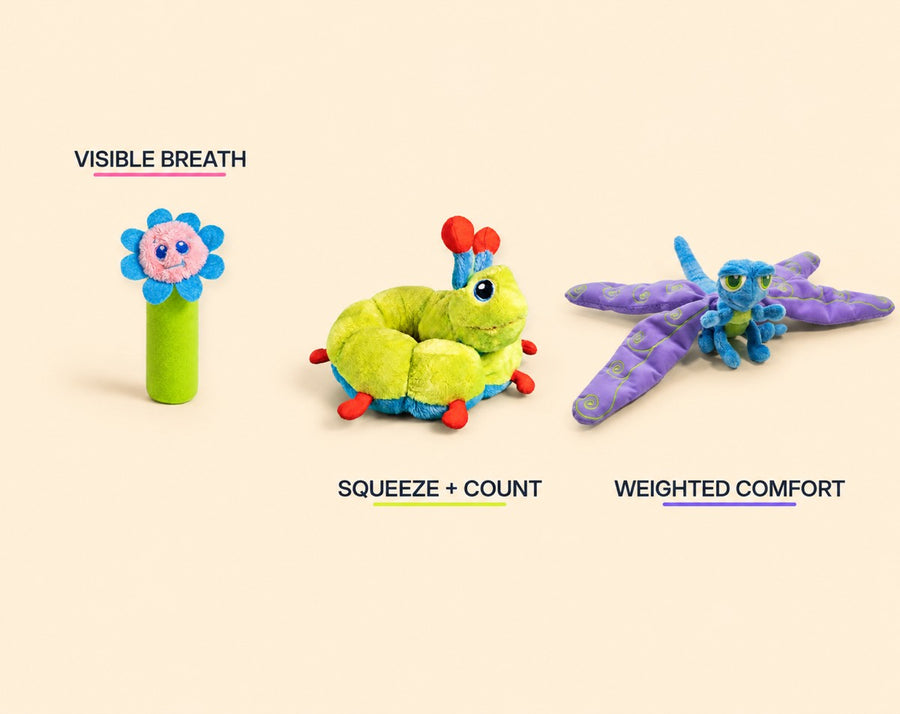
Calmee the Caterpillar

Calmee the Caterpillar

$34.99

Stretch, squeeze, count, or hold. A hand action a child can repeat as long as they want, at their own pace.
Good for
Hands that need a job — homework, car seats, waiting rooms.
See Calmee
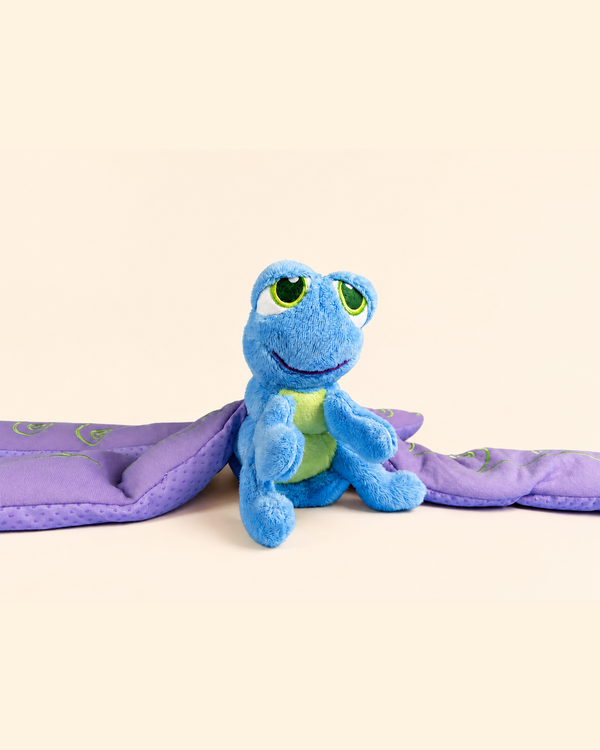
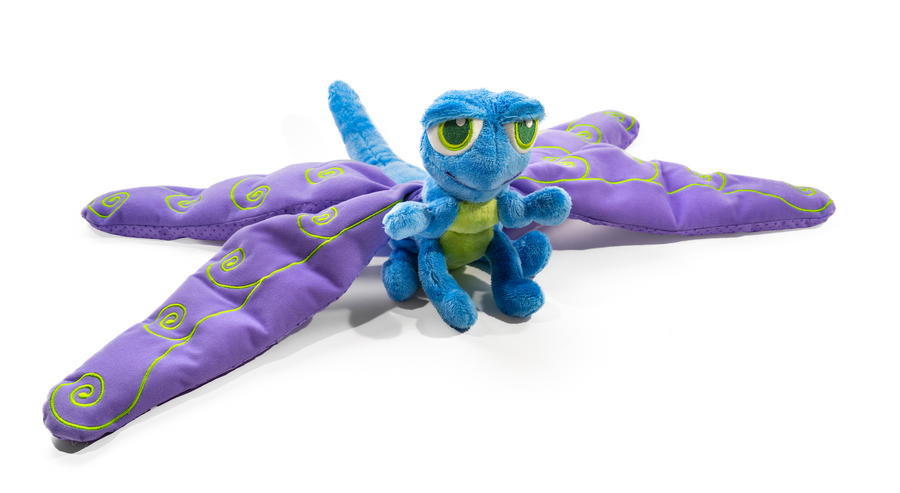
Flutter the Dragonfly

Flutter the Dragonfly

$49.99

A three-pound weighted dragonfly for a lap, shoulders, or across the legs at bedtime. The child places it and takes it off.

Specifications
3 lbs (about 1.4 kg) spread evenly across the body and four wings. Ages 4 to 12, adult supervision required.
See Flutter

Input type

Tactile and hand input

For the child who touches every surface they pass, picks at things, and needs something in their hands to be able to sit still.
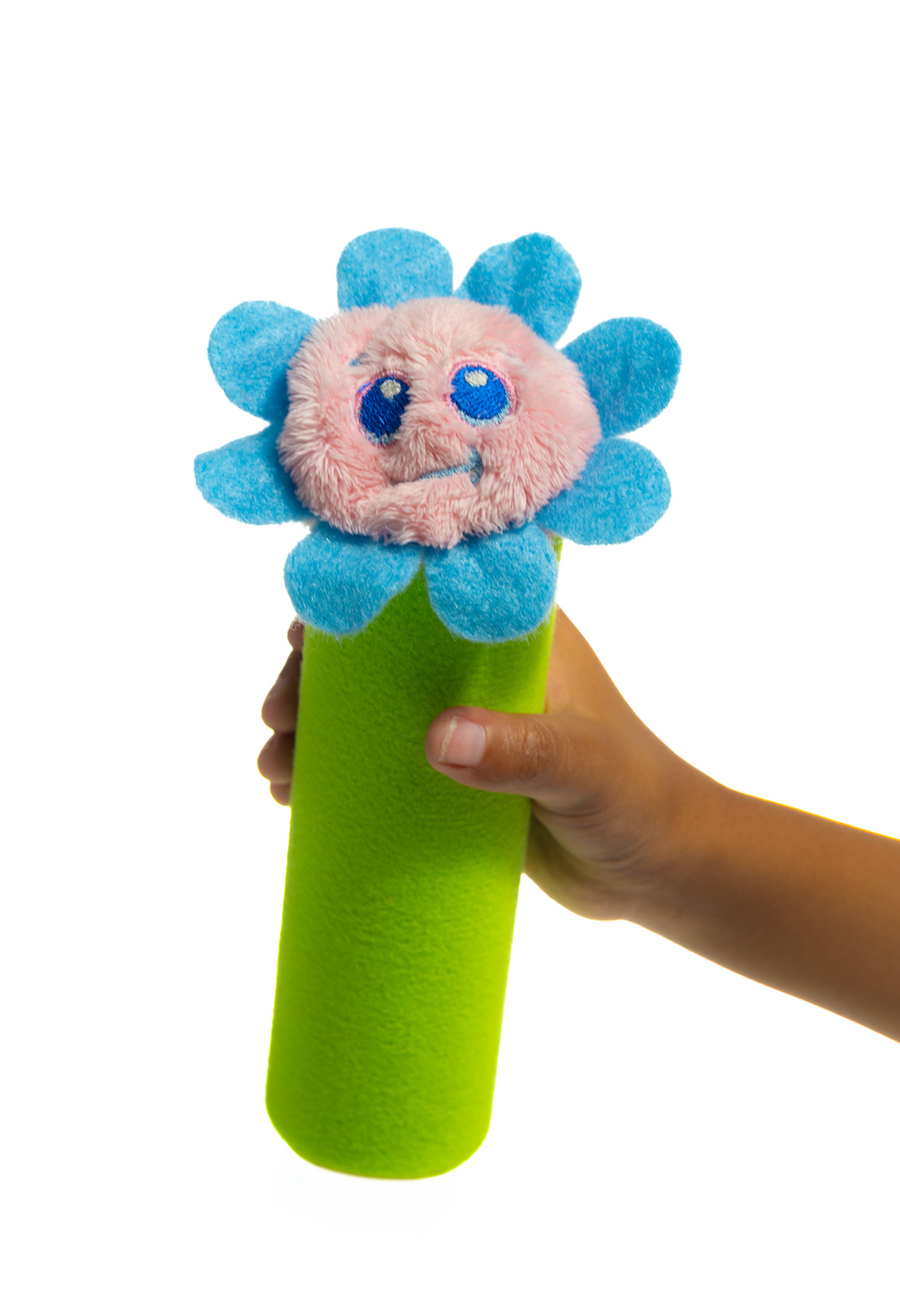
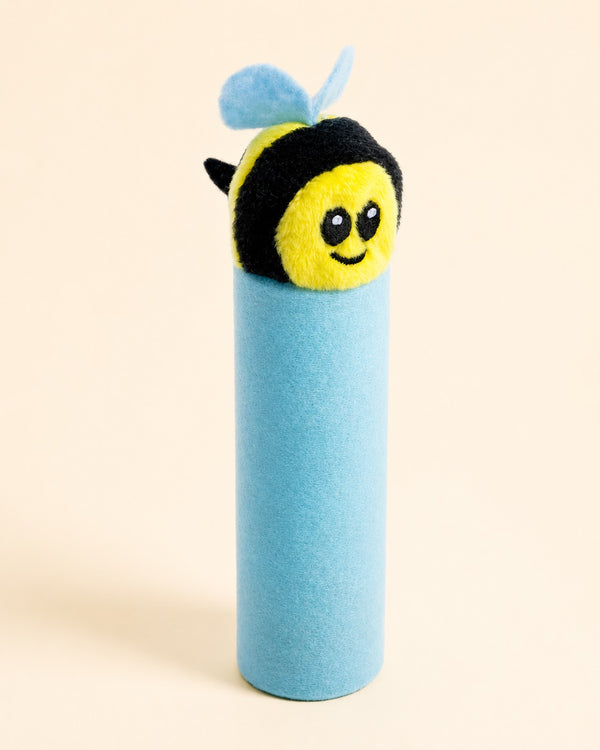
Bloomie

Bloomie

$14.99

A flower-and-candle tool to hold, turn over, and flip between two shapes. Something to do with the fingers that has an end and a beginning.
Good for
The breathing cue is optional. Plenty of children just like flipping it.
See Bloomie
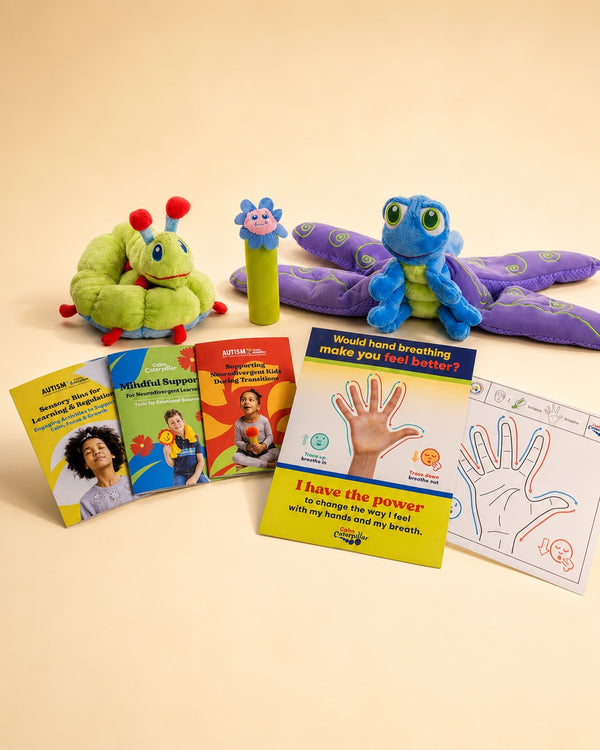
Calmee, Flutter and Bloomie lined up on a cream background.
Not sure where to start

Answer one question instead.

Tell us what you notice most often and we will point at one tool, one alternative, and where each may not fit.

Find your tool

No product required

Let’s go sensory seeking.

None of this needs a product. It needs about ten minutes and permission to be loud. Pick the situation you are in, offer the idea, let your child change it, and stop when they are done — there is no number of repetitions to finish.

Heavy work and crashing at home

  • Pile the sofa cushions into a crash pad and let them run at it. This is the whole activity; it does not need a rule.
  • Give them the laundry basket to carry upstairs, or the shopping to haul in from the car.
  • Push a loaded cardboard box across the carpet from one end of the room to the other.

Deep pressure without equipment

  • Roll them up tight in a blanket like a burrito, head out, and let them wriggle free themselves.
  • Stack the sofa cushions on top of them while they lie on the floor, then take them off on request.
  • Wall push-ups: hands flat, lean in, push. Ten of them before something hard is a good deal.

Spinning, swinging, upside-down

  • Office-chair spins they control — they stop it, you do not.
  • Hang head-down off the edge of the sofa and look at the room upside-down.
  • Somersaults on a mattress on the floor, or hanging from anything at the playground.

Outdoor and playground

  • Monkey bars and climbing frames: hanging by the arms is the strongest input a playground offers.
  • Digging, filling buckets with wet sand, and carrying rocks from one pile to another.
  • Rolling down a hill until they are dizzy and grass-stained.

Bedtime wind-down

  • Tuck the covers in tight down both sides so the bed holds them.
  • Slow, firm squeezes from feet to knees, once up each leg, then stop.
  • Let them push their feet hard against the wall or the footboard while lying down.

School day and homework breaks

  • Chair push-ups: hands on the seat, lift, hold, down. Nobody in the room has to notice.
  • Send them to carry something genuinely heavy to another room — books, a full water jug.
  • A wall sit or ten wall pushes before sitting down to write anything.

Car rides and waiting rooms

  • Press palms hard together, hold for a count, release. Repeat as long as it is interesting.
  • A heavy bag or backpack across the lap for the length of the journey.
  • Push both feet flat into the footwell as hard as they can, then let go.

The one rule, and when to get help

The one rule

Input is not a reward and not a punishment.

Crashing, hanging, and squeezing do not get earned for good behavior and do not get taken away for bad. They are how a body sorts itself out.

When to get help

An occupational therapist can build a plan around your actual child.

If seeking is getting your child hurt, if they cannot stop when they want to, or if it is taking over the day. This page is general information, not an assessment.

From parents

Mostly they tell us it was a relief to have a word for it.

“I spent two years thinking I had a behavior problem. It turned out I had a kid who needed to crash into things.”
Parent of a 5-year-old
“We do the cushion pile before school now instead of arguing at the door. Same child, completely different morning.”
Parent of a 7-year-old
“Calmee lives in her pocket. She stretches it in the supermarket and we get to the end of the shop.”
Parent of a 6-year-old

Give the seeking somewhere to go.

Every tool lists the physical action it offers, whether it makes sound, whether it is weighted, and where it may not fit. Options, not a prescription.

Talk to us about your setting

Tell us what the hard moments look like and we will suggest a starting point, or quote a set of tools for a room.

Who you are

Please do not include a child’s name, diagnosis, medical records, or school records.