


Schools
Calm Caterpillar for schools
Sensory-first support for real school days.
Hands-on tools, calm-corner routines, and adult guidance designed to help students notice what their bodies need before another instruction is added.

“It’s really helping students understand that, even when you’re frustrated, you have something at your fingertips that you can do to help control how you feel.”
 Iranetta Rayborn Wright
Superintendent, Cincinnati Public Schools
Iranetta Rayborn Wright
Superintendent, Cincinnati Public Schools
The numbers
Built from years of work with children, families, and school communities.
Teachers and classrooms
Over 3,500
Years of programming
Over 10 years
Where it started
A district-wide effort at Cincinnati Public Schools.
What body-first looks like in a classroom
When a student is overwhelmed, another instruction may be one more thing to carry. Body-first support gives them a physical place to begin.
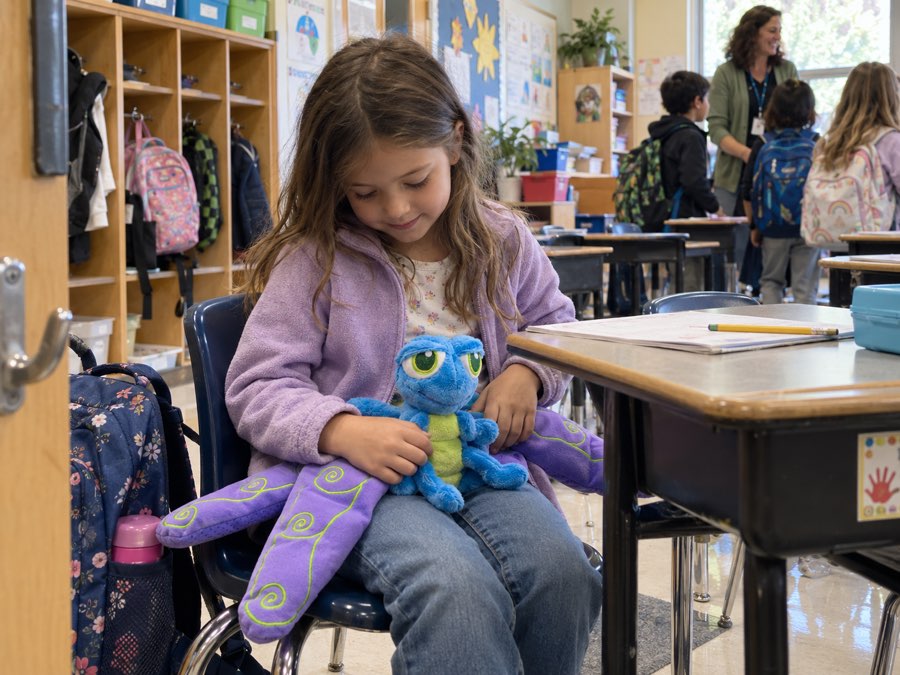
Arrival
- Student may choose
- Sit, hold a tool, or look at a visual
- Adult practice
- Offer the routine without demanding an explanation
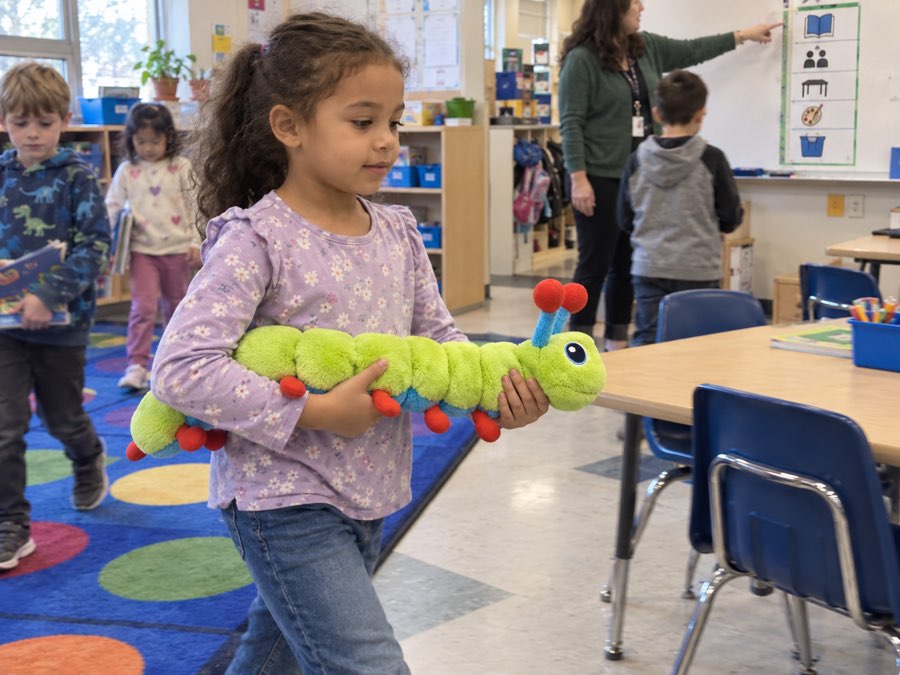
Transitions
- Student may choose
- Breathe, count, or carry a familiar tool
- Adult practice
- Warn before the change and keep the sequence predictable
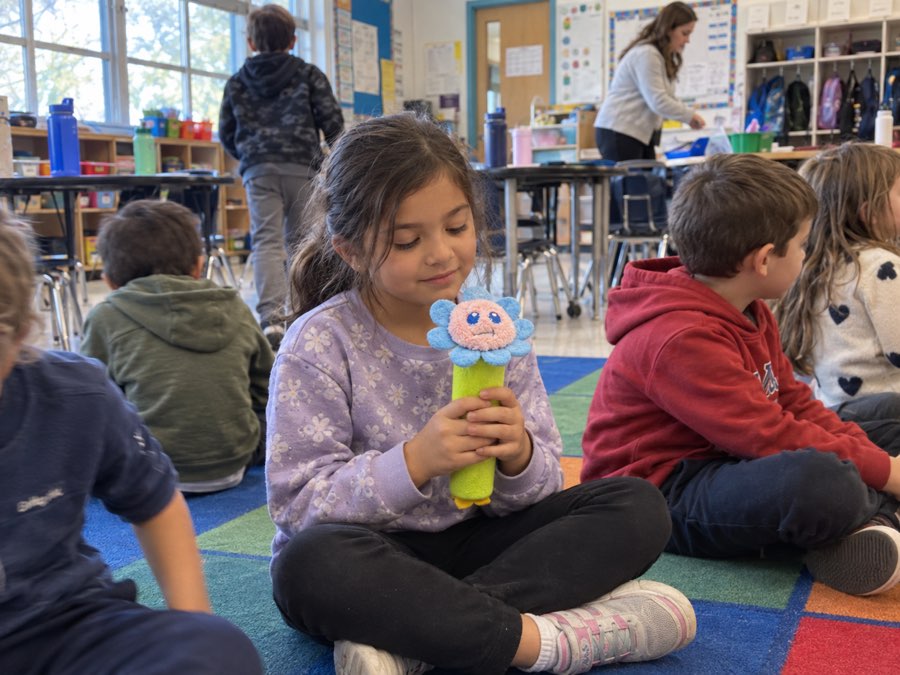
After recess
- Student may choose
- Sit, hold, or use a breathing visual
- Adult practice
- Make re-entry available without presenting it as punishment
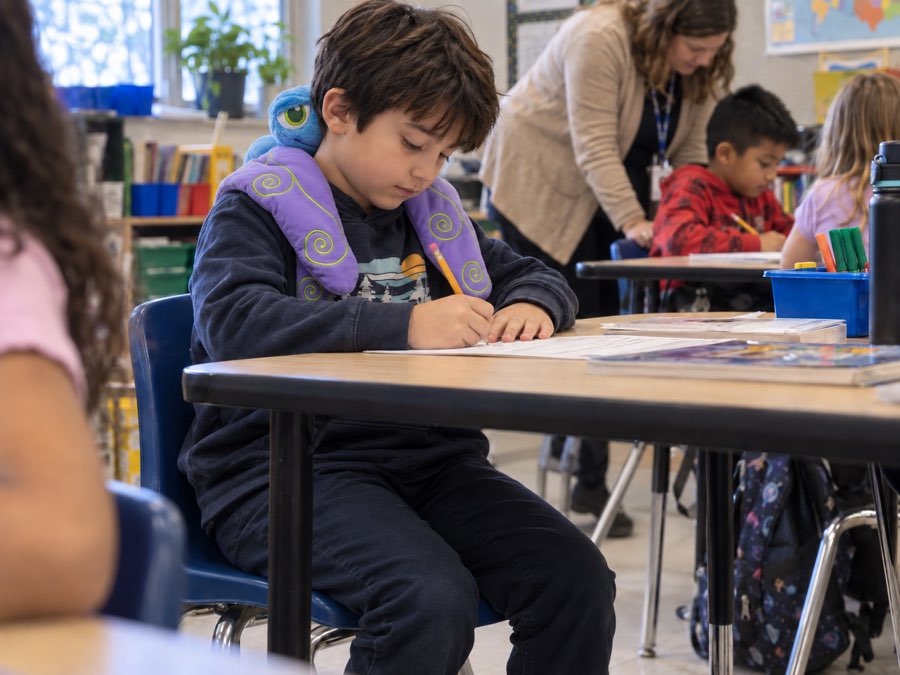
Independent work
- Student may choose
- Keep a quiet tool nearby or return later
- Adult practice
- Preserve access to instruction and avoid using the corner as removal by default
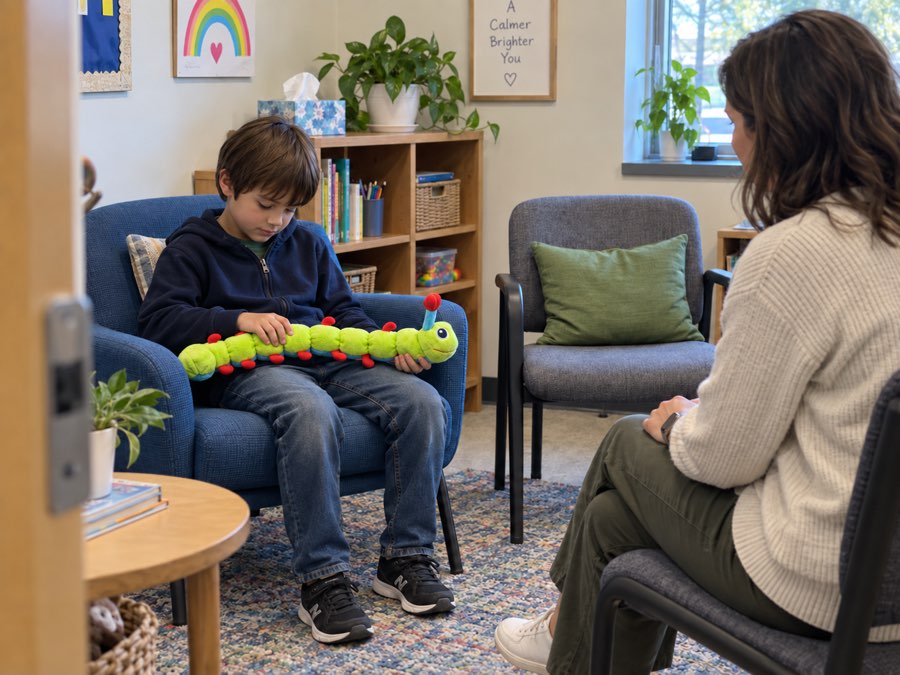
Conflict recovery
- Student may choose
- Pause, choose a physical action, and reflect later
- Adult practice
- Separate the reset from the later conversation
Not every student uses the same option, and a tool does not guarantee a return to learning. Choice stays with the student — “choose something else” and “return later” are always available.
Professional development
We train the adults in the room, too.
Professional development training is provided regularly to schools and districts. Staff practice the routine with the tools in hand before students ever see them.
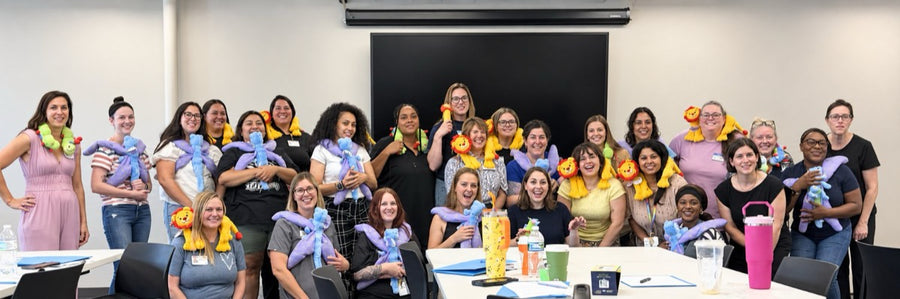
3,000+ teachers
Trained to introduce and model the tools.
In your building
Sessions run on site with the kits present.
Scaled to the rollout
Formats and pricing depend on the size of the plan.
Start with one classroom. Build for the whole school.
Choose the physical tools, adult support, and ordering path that fit your setting. We will separate what is available now from anything that requires a custom plan.
Calm Corner for School
A defined classroom kit with hands-on tools and implementation materials.
Explore the classroom kitMulti-classroom and schoolwide packages
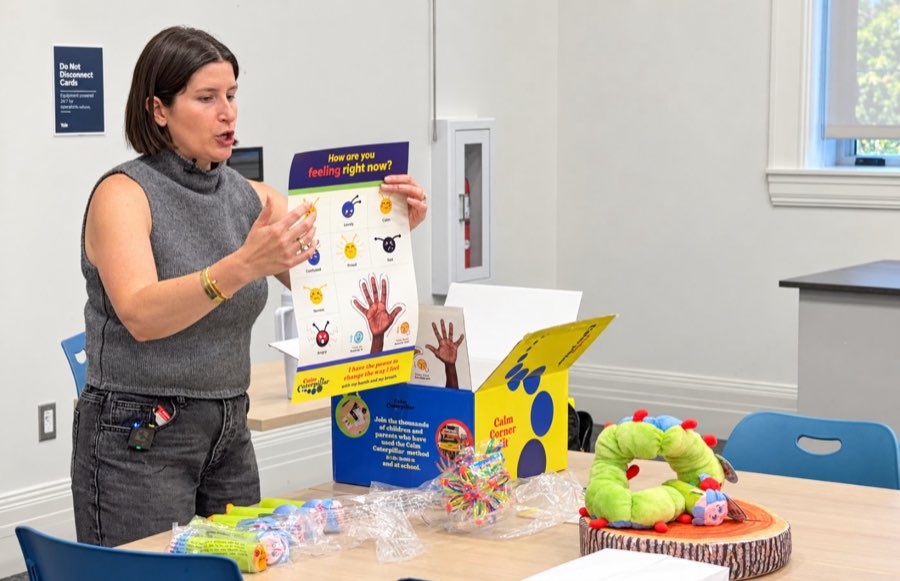
Calm Caterpillar’s kits and program have been implemented district- and school-wide.
Request a school quoteImplementation and staff support
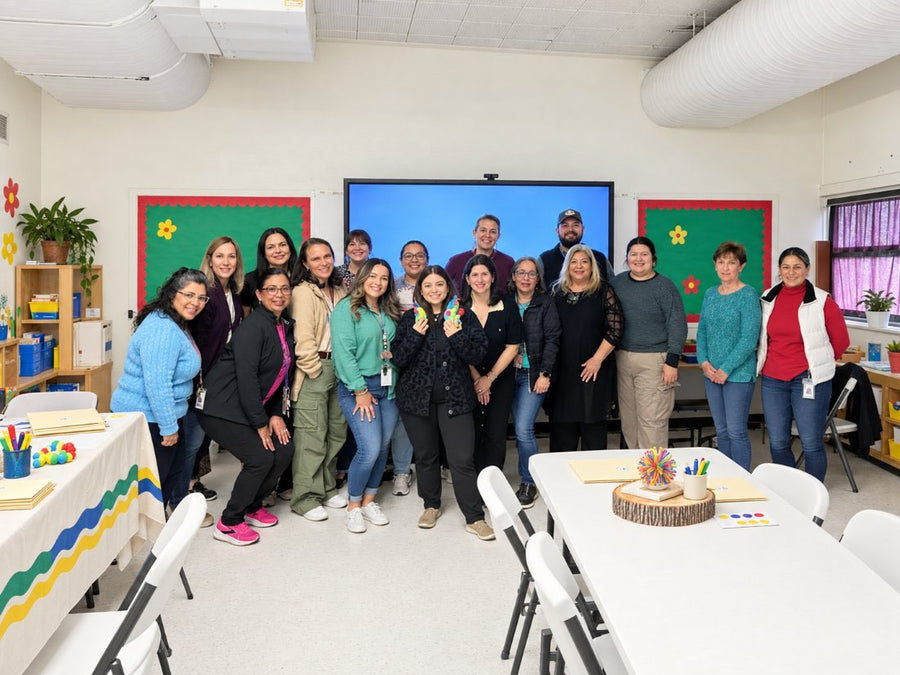
Professional development training is provided regularly to schools and districts.
Talk through implementationBooks, guides, and replacement tools
Supporting materials and individual tools for maintaining classroom routines.
View classroom resources“We gave the kits to the teachers on the 18th, and they were given the option to start immediately or wait until next year to set up their calm corner. Most teachers immediately set up their corner.”
A routine adults can repeat
The tools work best when students meet them before the hardest moment. Introduce the options, model them without performance pressure, and keep the routine consistent enough to recognize.
Understand the setting
Identify the classrooms, routines, transitions, student access needs, and staff roles involved.
Choose tools and routines
Select a small number of physical options and decide where they will live.
Prepare adults
Align on how tools are introduced, offered, cleaned, reset, and discussed.
Introduce during neutral moments
Let students see and try the choices before a hard moment requires them.
Support consistent use
Offer rather than force. Reset materials. Keep the space accessible and voluntary.
Review and adjust
Reflect later, notice what students choose or avoid, and revise the setup as needed.
Calm corners are not time-outs.
A calm corner should stay available, voluntary, and connected to the classroom. It is not a place a student is sent until they become quiet.
A calm corner is
Introduced before it is needed
A calm corner is not
Explained for the first time during a crisis
A calm corner is
A place with more than one choice
A calm corner is not
A single required calming technique
A calm corner is
Available without shame
A calm corner is not
A consequence for behavior
A calm corner is
Voluntary whenever possible
A calm corner is not
Forced isolation
A calm corner is
Connected to classroom routines
A calm corner is not
Removal from instruction by default
A calm corner is
Reset after use
A calm corner is not
A performance test for becoming calm
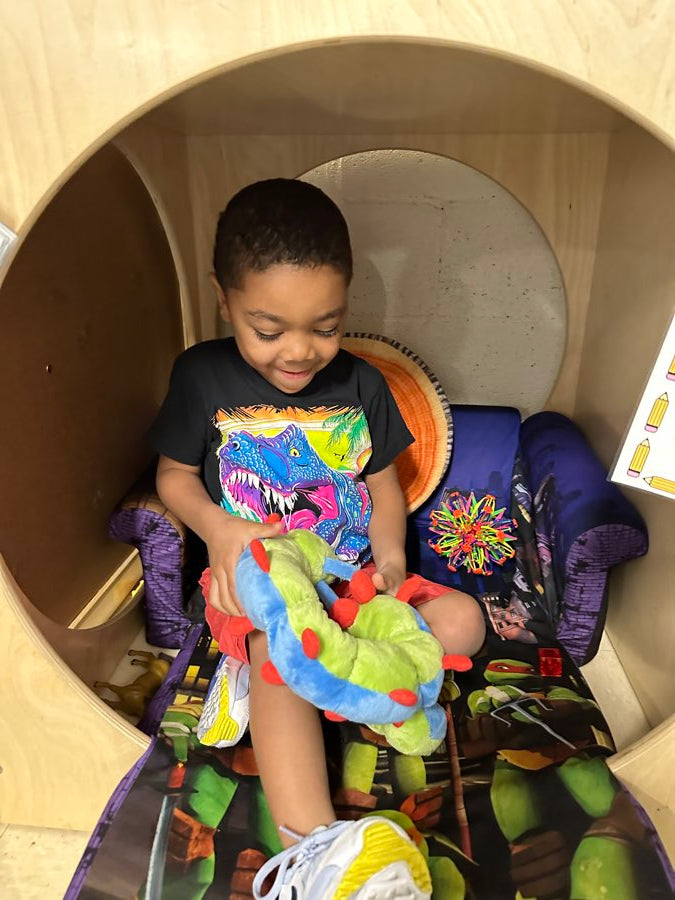
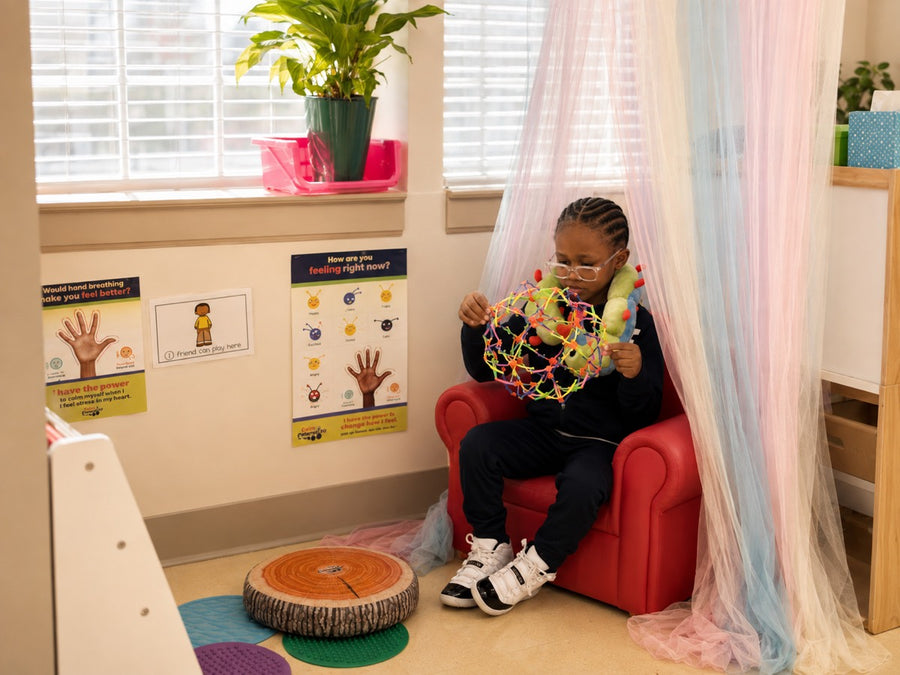
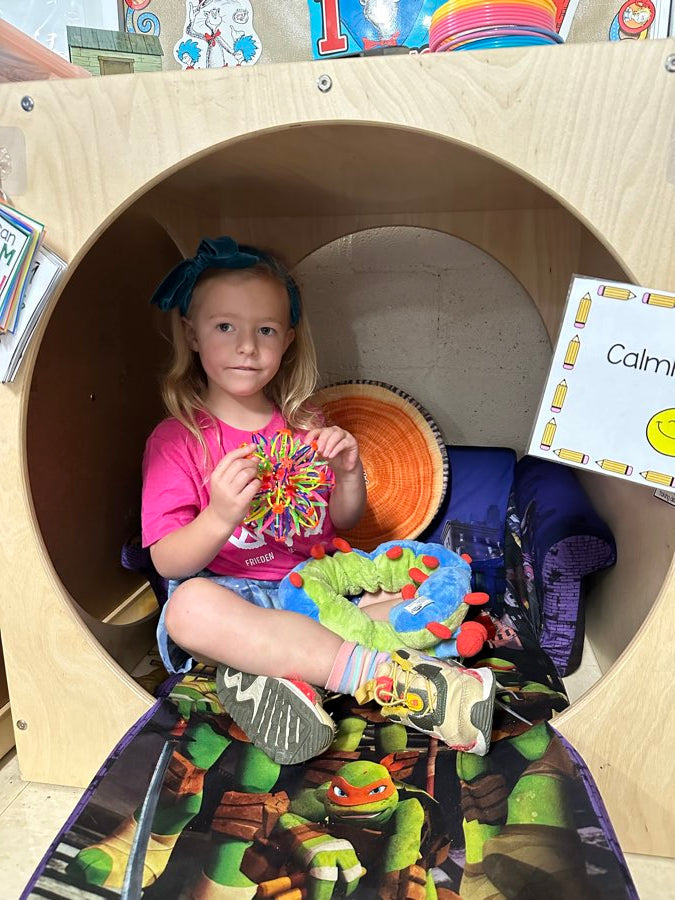
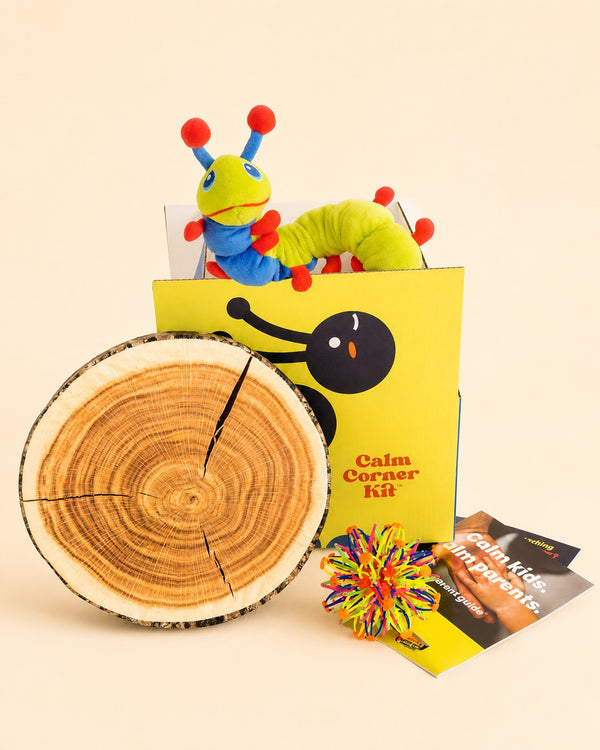
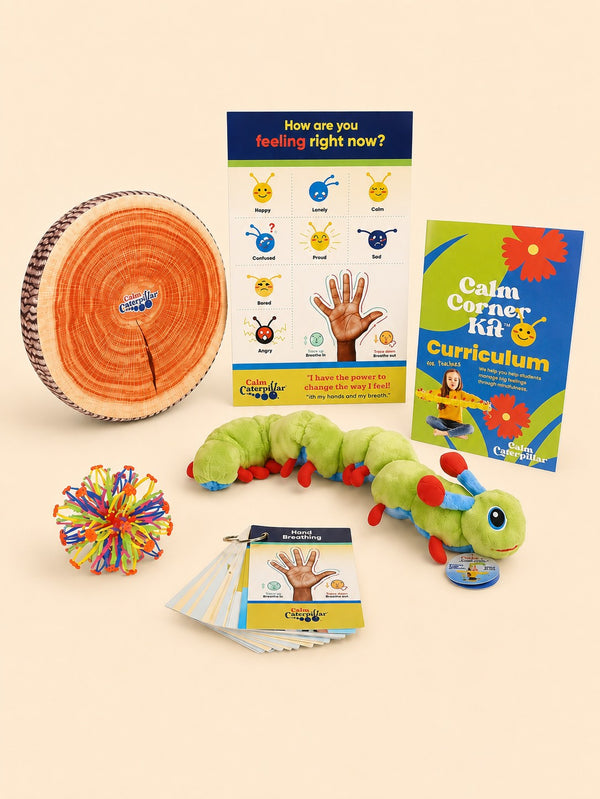
The classroom kit
A calm corner is a routine, not just a corner.
Give students a predictable place, clear choices, and hands-on tools they can use without turning regulation into a reward, punishment, or performance.
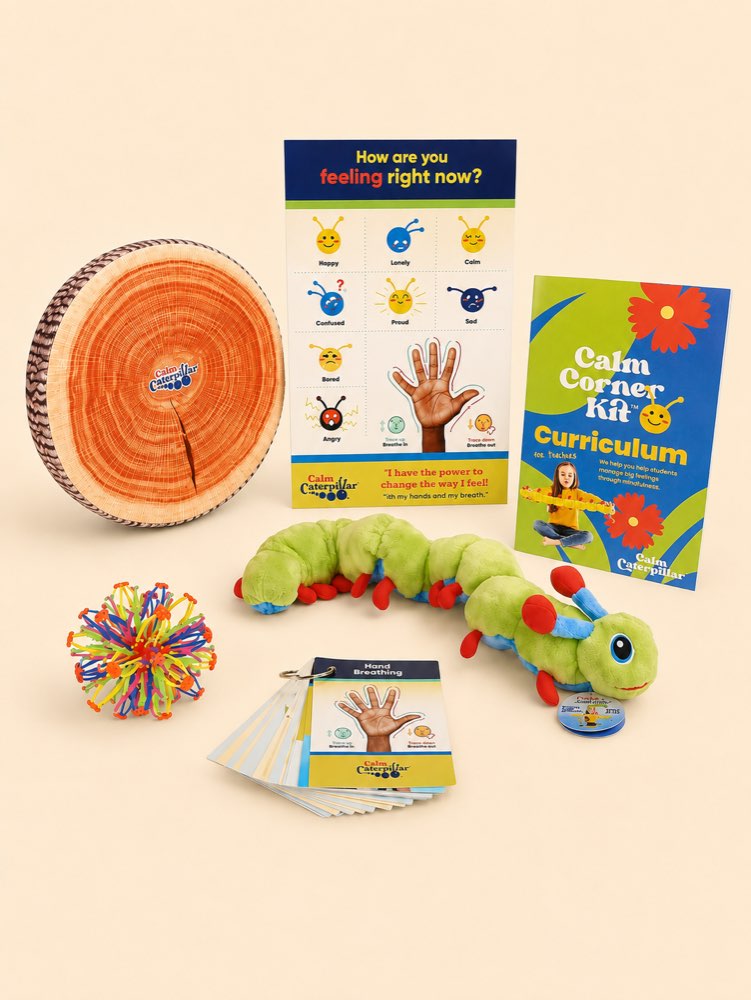
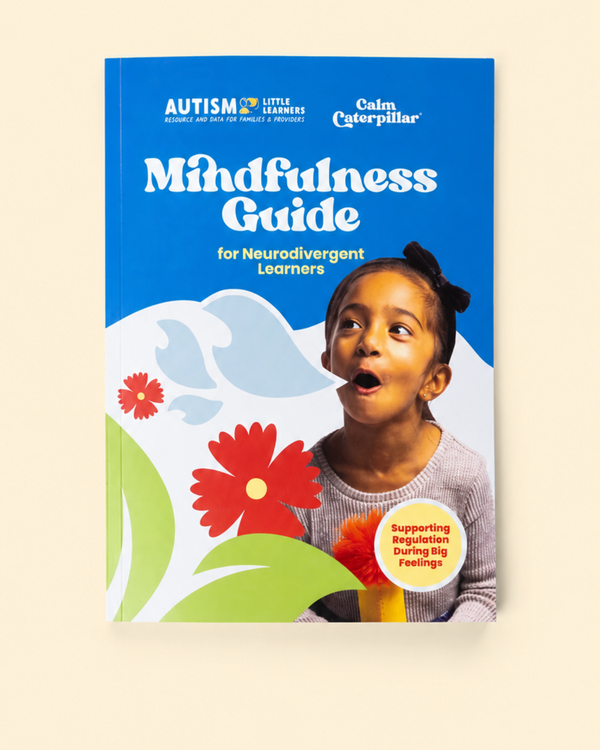
Teacher Guide
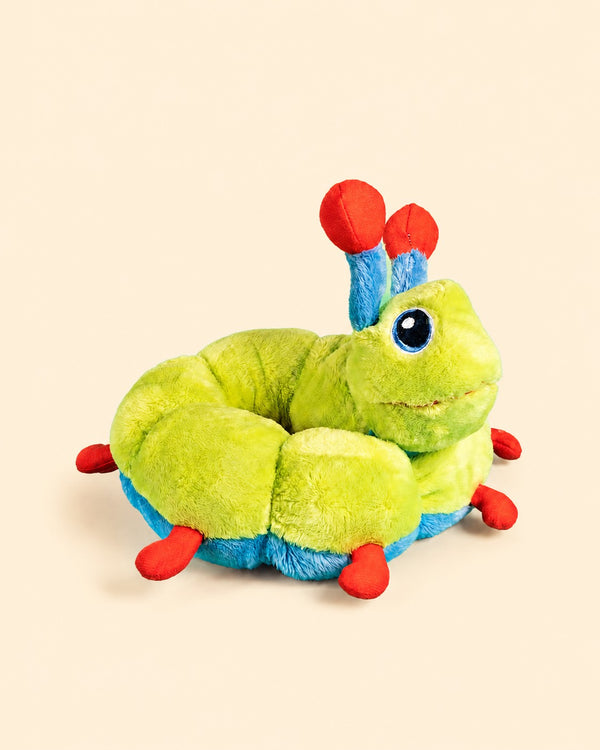
Calmee the Caterpillar
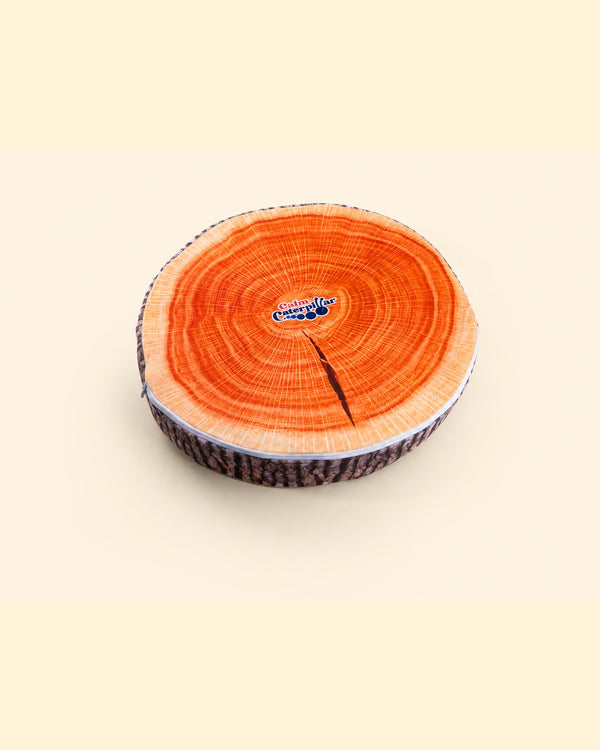
Tree stump sitting cushion
Expandable breathing ball
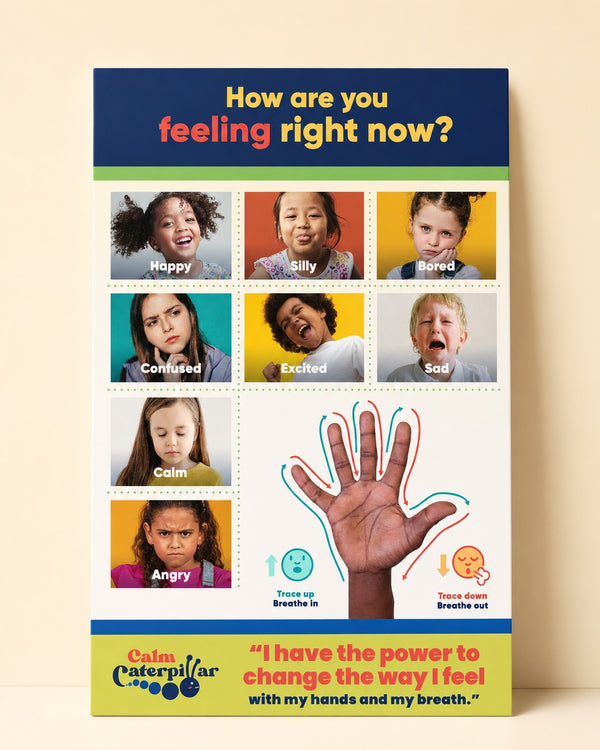
Hand-Breathing + Emotions Poster
The online Parent Class is not included in the classroom kit.
The Calm Caterpillar maps to SEL standards
Calm Caterpillar practices can be mapped to common school frameworks, but the tools are not a substitute for a school’s adopted curriculum, individualized support plan, or professional judgment.
Calm Caterpillar practice mapped against Social Foundations SEL standards.
Social Foundations
Emotion Identification
- Operational definition
- Identifies and labels emotions of self and others and responds with empathy to others’ expressions of emotions.
- Level
- 3 — Identifies and explains the reasons behind and the consequences of the emotions expressed by self and others.
- Calm Caterpillar application
- Teaches children to identify that they need a second to reset by using the calm corner. Hand breathing shows a child how to change an emotion through breath, so they can name an emotion that does not feel good to them.
Social Foundations
Response to Distressed Peer
- Operational definition
- Identifies and labels emotions of self and others and responds with empathy to others’ expressions of emotions.
- Level
- 3 — Responds to a distressed peer by offering verbal and physical comfort and seeking adult assistance if needed.
- Calm Caterpillar application
- Children learn to use hand breathing with other children, and can use buddy breathing to comfort a peer by the end of the program.
Social Foundations
Seeking Emotional Support
- Operational definition
- Seeks emotional support and guidance from familiar adults.
- Level
- 3 — Seeks support when encountering challenging situations. 5 — Seeks support after attempting to deal with challenging situations on their own.
- Calm Caterpillar application
- Hand breathing and the calm corner give the child a way to handle challenging emotional situations on their own, practised through different breathing techniques and the same routine at home.
Calm Caterpillar is not certified, endorsed, approved, or guaranteed compliant by CASEL, PBIS, a district, or any other framework owner.
Preliminary evaluation summary · January 2026
Built in real school communities
Calm Caterpillar’s school program has been shaped through randomized classroom evaluations, educator interviews, parent focus groups, and family surveys in a range of preschool settings.
3 randomized trials
Across the broader preschool program.
12 classrooms · 4 sites
Public, private, and community settings, including Head Start.
3 classrooms · 2 sites
Participated in the kit-specific evaluation.
79%
Used at least some kit components at home.
68%
Created a dedicated calm-corner space at home.
Timing mattered
Parents reported greater helpfulness when tools were offered as children began getting upset, rather than after they were already upset.
What educators and families observed
- Observation
- Children remembered and initiated practices on their own.
- Observation
- Children shared strategies with parents and siblings.
- Observation
- Some children preferred practicing with another person.
- Observation
- Teachers integrated techniques into everyday classroom routines.
How the findings shaped the kit
- Change
- Introduce it during calm moments.
- Change
- Use it together before expecting independent use.
- Change
- Never treat the tools or calm corner as punishment.
“The book [parent manual] actually was perfect… It’s not long. It’s like quick tips and I could give it to him and he can use it with her.”
Methods and limitations
How the evaluation was run, and what it does not show
Preliminary mixed-methods findings. Kit-specific results came from one randomized evaluation involving three classrooms across two sites and included teacher interviews, parent focus groups, and surveys. The supplied summary does not include survey denominators, response rates, study dates, effect sizes, or statistical analyses. The kit-outcomes manuscript was under review as of January 14, 2026.
The observations above are what educators and families reported. They are not independently measured product outcomes.
What educators notice
“We pull groups of students weekly for lessons, and the week that the teachers got the kits, our lesson was on what to do to calm down big feelings and one of the groups told us ‘you go to the caterpillar center.’”
“We went into another classroom to do a group lesson, and the teacher had the caterpillar around her neck and was telling us she needed a calm minute. Perfect opportunity to teach the kids calming strategies are not just for kids.”
Schools and communities we have worked with
Each name carries its own relationship language — customer, partner, program site, or training participant. A logo is never used to imply endorsement.
School districts and programs
Built for school purchasing, too
Tell us what you are planning, how many classrooms or sites are involved, and when you need materials. We will help identify the right ordering path.
Purchase orders
PO process and ordering is standard.
Ask in your quote requestW-9
A W-9 can be provided.
Ask in your quote requestTax exemption
Our school specialist can walk you through the paperwork.
Ask in your quote requestVendor forms
Our school specialist can walk you through the paperwork.
Ask in your quote requestVolume pricing
Pricing based on volume can be discussed with our school specialist.
Ask in your quote requestLead times
Lead times may vary, but inventory is held in our warehouse, ready for school implementation.
Ask in your quote requestShipping
A variety of shipping options to accommodate distribution requirements.
Ask in your quote requestReplacement tools
Multi-year deals and pricing available.
Ask in your quote requestQuestions schools ask first
What ages or grades is the classroom kit designed for?
Ages 3 to 12, which covers preschool through most elementary grades. Younger rooms need closer adult supervision with the smaller parts.
What does Calm Corner for School include?
Five component types: a Teacher Guide, Calmee the Caterpillar, a tree stump sitting cushion, an expandable breathing ball, and the Hand-Breathing + Emotions Poster. The online Parent Class is not included in the classroom kit.
How much classroom space is needed?
Plan on roughly three by three feet — enough for the stump cushion and one student, with the posters on the wall above. Between uses the whole kit stores in a single bin or on one shelf.
How should staff introduce the tools?
Introduce the options during neutral moments, model them without performance pressure, and offer rather than require them. Keep the routine consistent enough that students recognize it before a hard moment.
Is training included?
Professional development training is provided regularly to schools and districts. Formats and pricing depend on the size of the rollout — our school specialist will walk you through the options.
Can students choose not to use a tool?
Yes. Use is voluntary whenever possible, and a student can choose something else or return later. Nothing here treats speaking, sitting still, quietness, or a fast return to work as the correct outcome.
How are tools cleaned and stored?
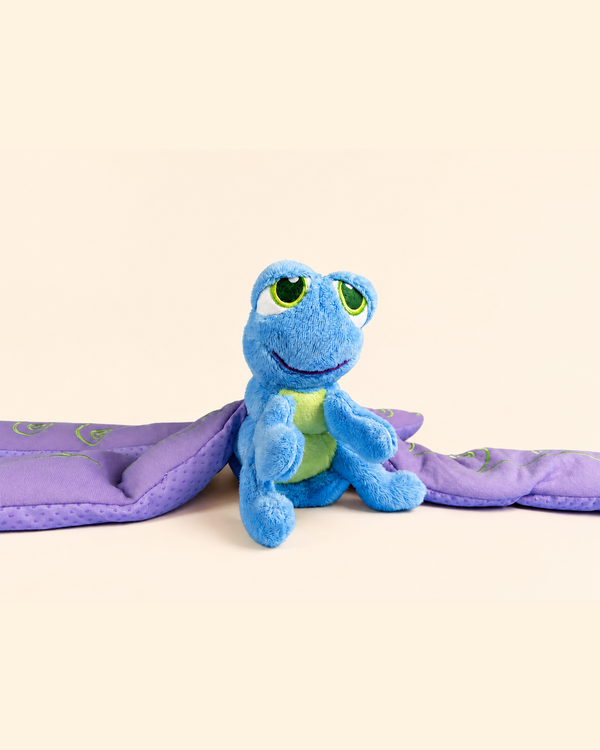
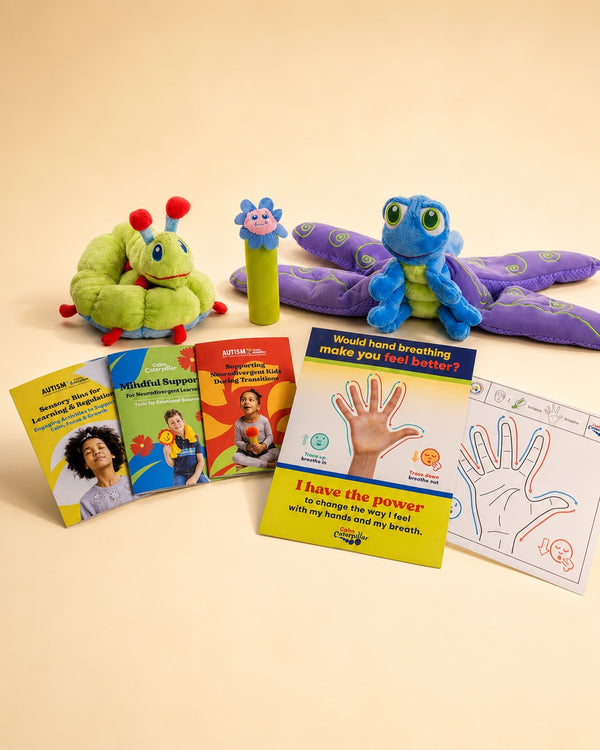
Cleaning is basic. Calmee and Rory can be washed and air-dried; everything else is spot clean with a damp cloth. Store the kit in one bin or on a shelf so the corner can be reset quickly between students.
Can schools order replacement items?
Yes. Individual items can be reordered when something wears out or goes missing — tell your school specialist which component you need and it can go on the same PO.
Do you accept purchase orders and tax-exempt orders?
Yes. The PO process and ordering is standard, and a W-9 can be provided. For tax-exemption paperwork, our school specialist can walk you through it — ask in your quote request.
Can packages be customized for multiple classrooms or sites?
Calm Caterpillar’s kits and program have been implemented district- and school-wide. Tell us how many classrooms or sites are involved and our school specialist will put together the right package, including multi-year pricing.
How does this relate to CASEL, PBIS, or our local framework?
Calm Caterpillar practices can be mapped to common school frameworks, but they are not a substitute for an adopted curriculum, an individualized support plan, or professional judgment. Calm Caterpillar is not certified, endorsed, approved, or guaranteed compliant by CASEL, PBIS, a district, or any other framework owner.
Are Calm Caterpillar tools a treatment or individualized clinical recommendation?
No. The tools are not a treatment, a diagnosis, or an individualized clinical recommendation, and they do not replace an IEP, a behavior plan, an occupational-therapy recommendation, counseling, or clinical care.
Tell us what your school needs
Share the size of your setting, the support you are exploring, and your target date. We will follow up with the information needed for the next step.