
Practice · 2 minutes · no sign-up
Three breaths with Bloomie.
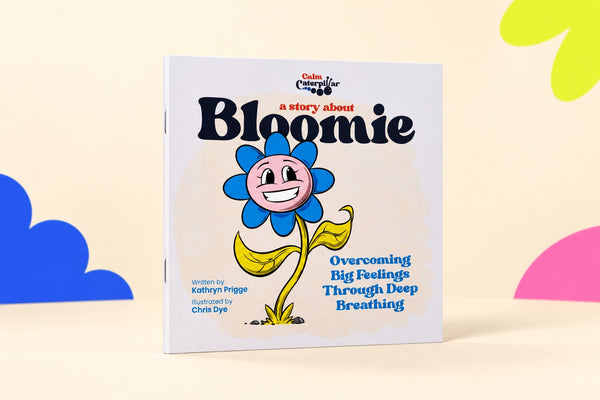
Petals open while you breathe in, and close while you breathe out. A child can copy something they can see without being talked through it. Do it on ordinary days so it is available on hard ones.
Follow along
Watch the flower and copy it.
Nothing is submitted and nothing is stored. Press start, sit next to them, and follow it yourself.
Breathe in while the petals open. Breathe out while they close. Three breaths is the whole target.
Pattern
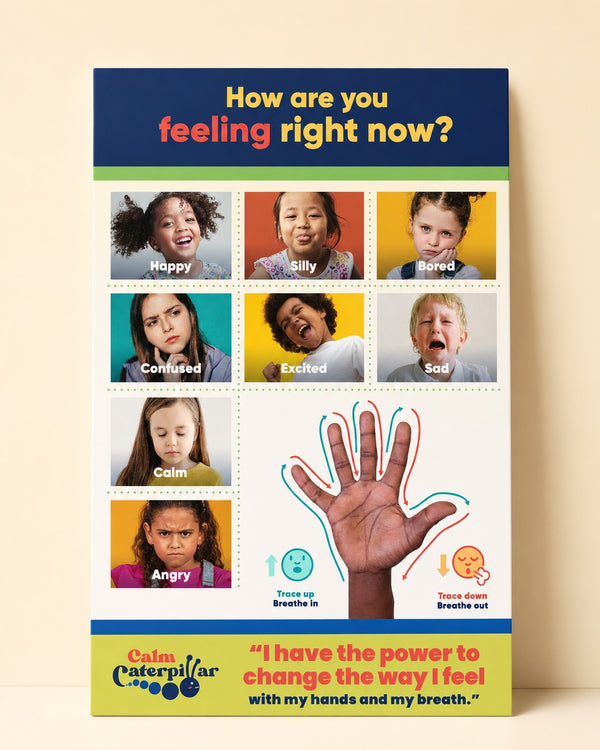
Breathing practice is not a treatment. If a child is distressed and cannot follow it, stop — a physical thing to hold works better than an instruction.
How to introduce it to a child
Do it yourself first, out loud
Sit next to them and follow the flower without asking them to join. Most children copy within two breaths.
Use it on an easy day
Something introduced during a meltdown reads as a correction. Practised on a calm Sunday, it becomes familiar.
Three is the whole target
Long sessions turn it into a task. Three breaths, then move on to whatever was happening next.
Let them stop
A breath a child can refuse is a tool. A breath they must complete is another instruction in a morning that already has too many.
Printable
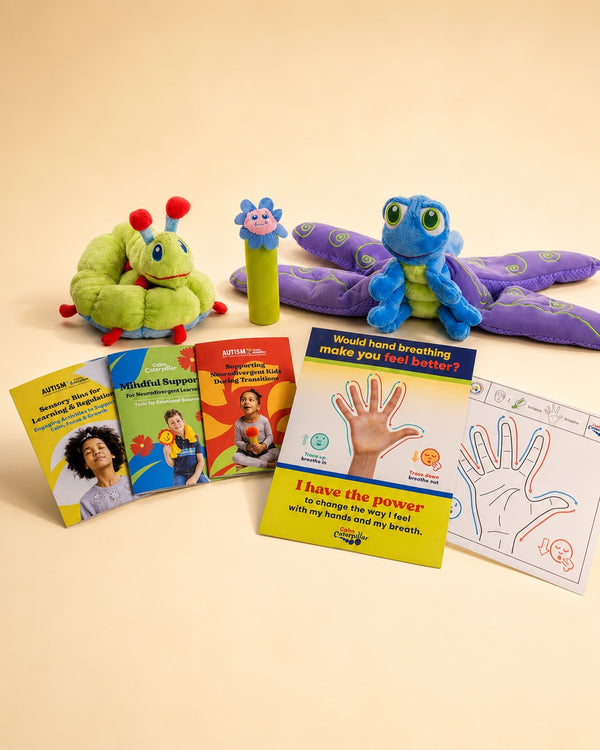
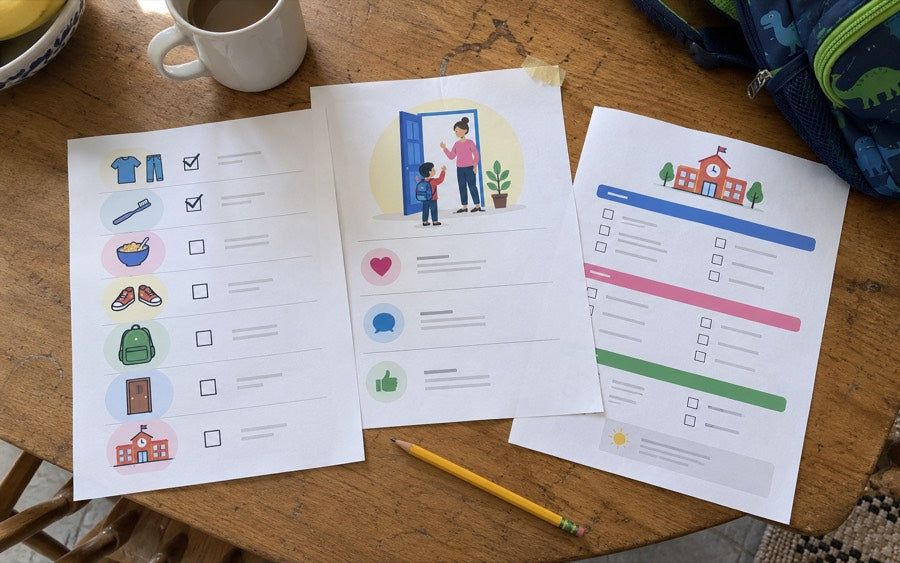
Make the morning card for your fridge
Four steps, in the order you actually do them. Print it once and stick it at their eye level rather than yours — it is in the free morning pack.
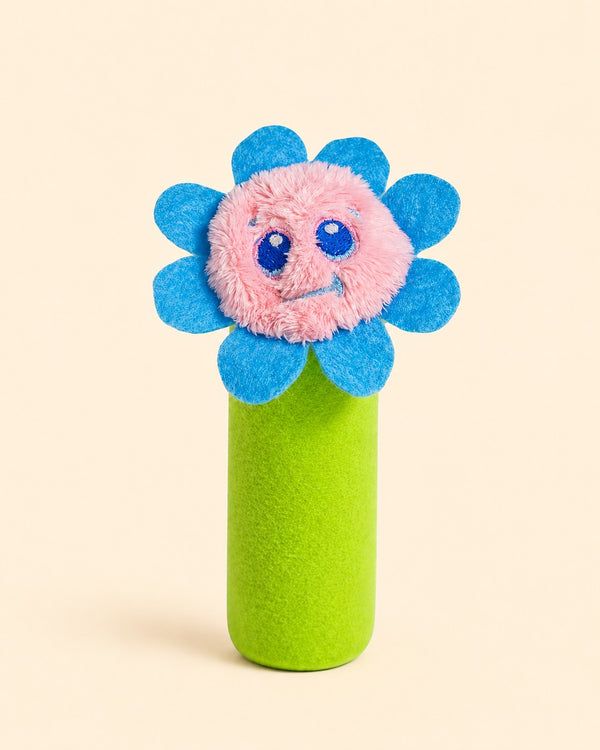
Bloomie does the same thing in a coat pocket.
Bloomie is the same breath, in a child’s hand, with a flower at one end and a candle at the other — no screen and nothing to press start on.
Other topics
View all resources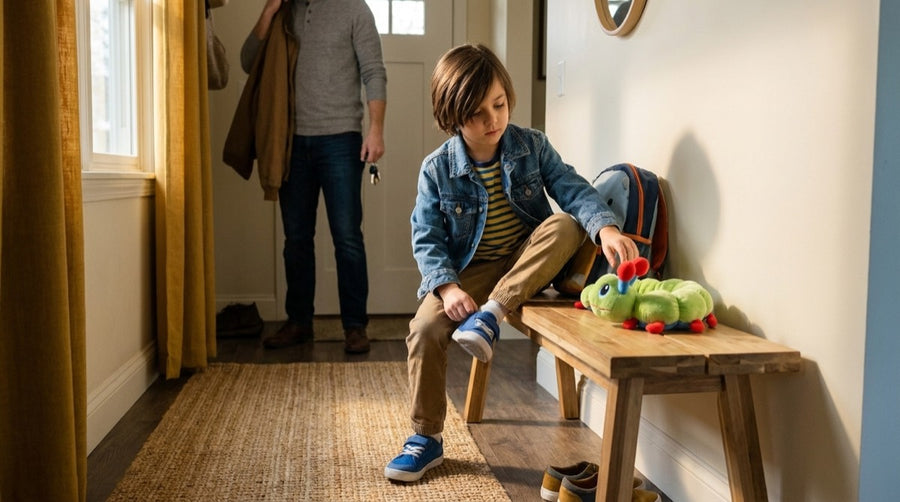
School mornings and drop-off
Where a two-minute practice fits into a forty-minute morning.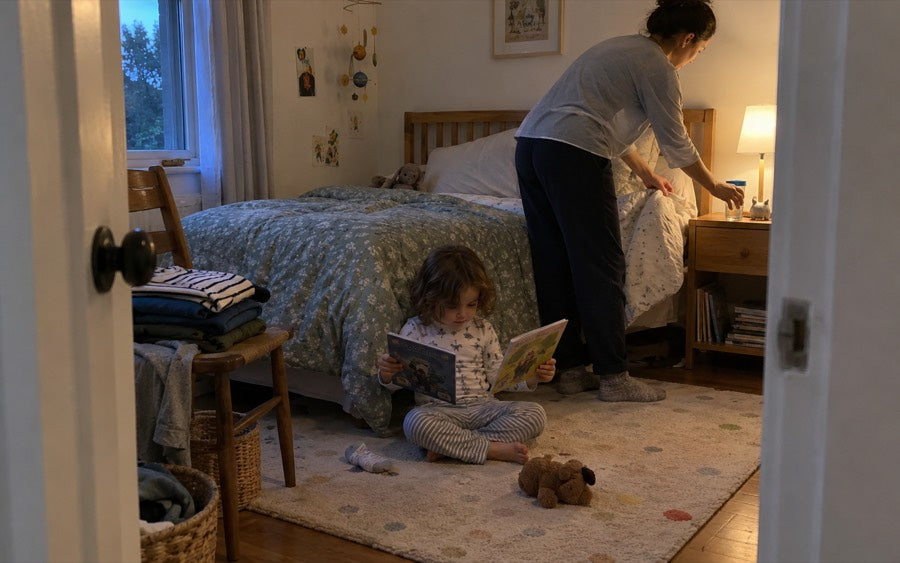
Bedtime and winding down
Three breaths at the end of the story, every night, in the same order.