




Guide · checklist
Four jobs a corner has to cover, what to put in it, what to leave out, and how to introduce it so it never reads as punishment.
At home
Where it goes and how it is used matter more than what is in it. A corner set up in the wrong room gets abandoned in a fortnight.
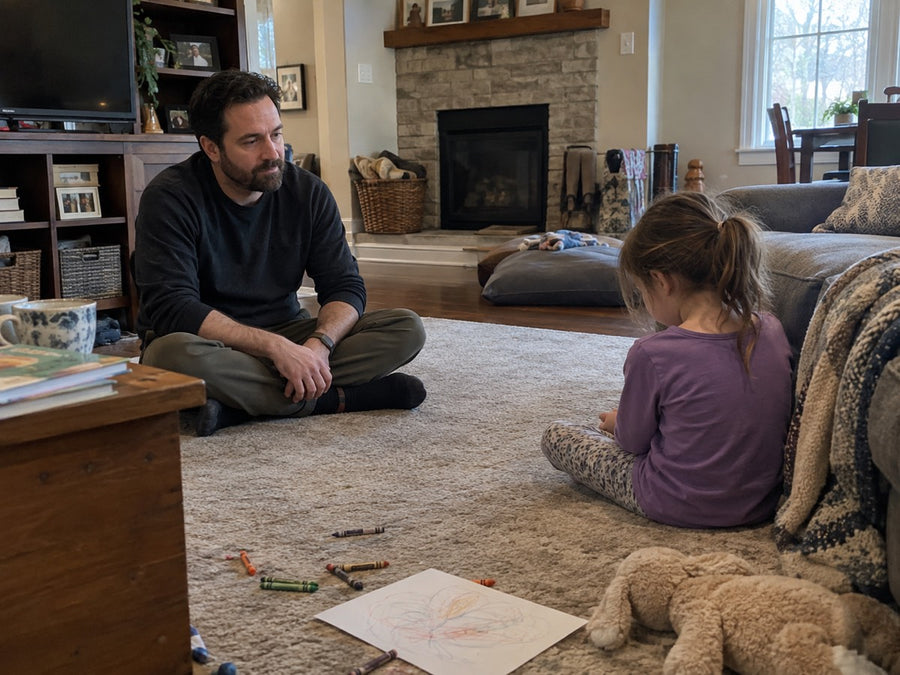
A corner of the living room beats a bedroom upstairs. A child in distress will not walk away from people to reach it, and one they never reach is furniture.
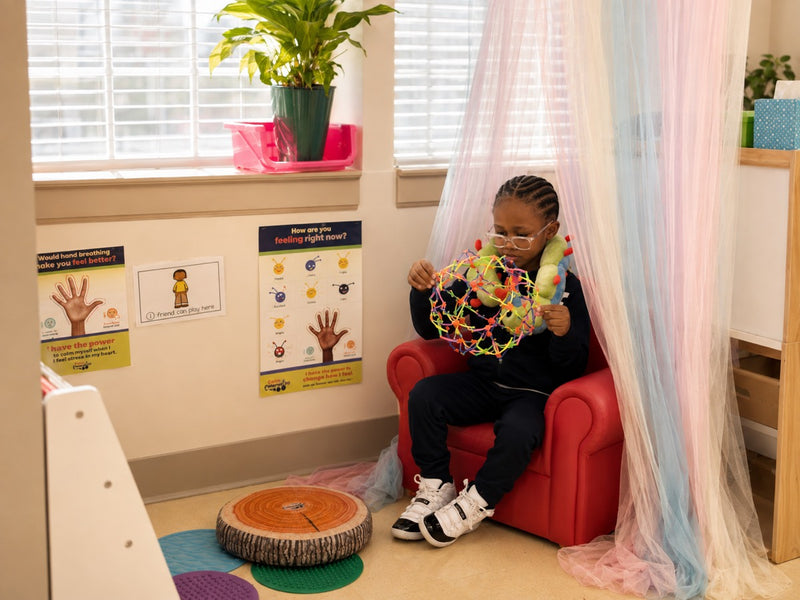
A rug, a shelf turned sideways, a canopy. The boundary is what makes it a place rather than a patch of floor, and it is the part children notice first.
Choosing the cushion and where the box sits is the difference between their place and yours. Do this on a calm afternoon, not the evening after a hard day.
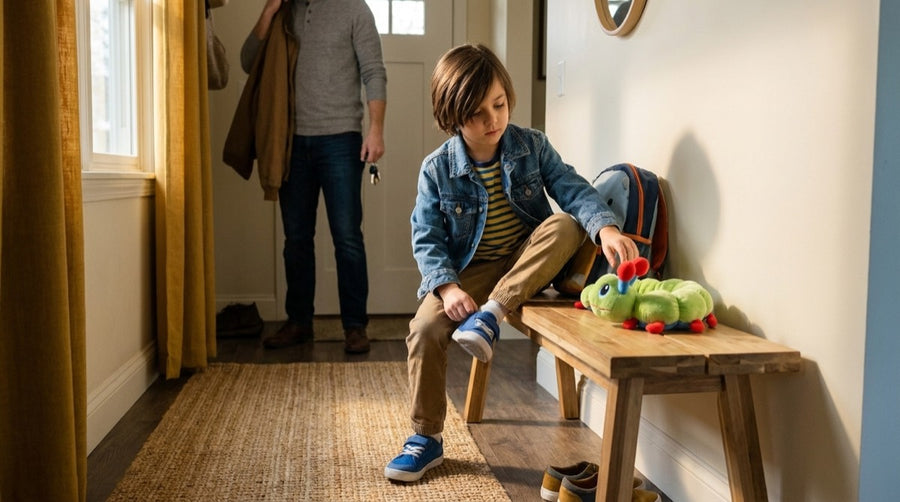
Read there. Sit in it yourself. A corner first offered mid-meltdown is heard as being sent away, and it keeps that meaning for a long time.
Invite, offer, or go together. The moment it is used as a consequence it becomes a naughty step, and no amount of soft furnishing undoes that.
In a classroom
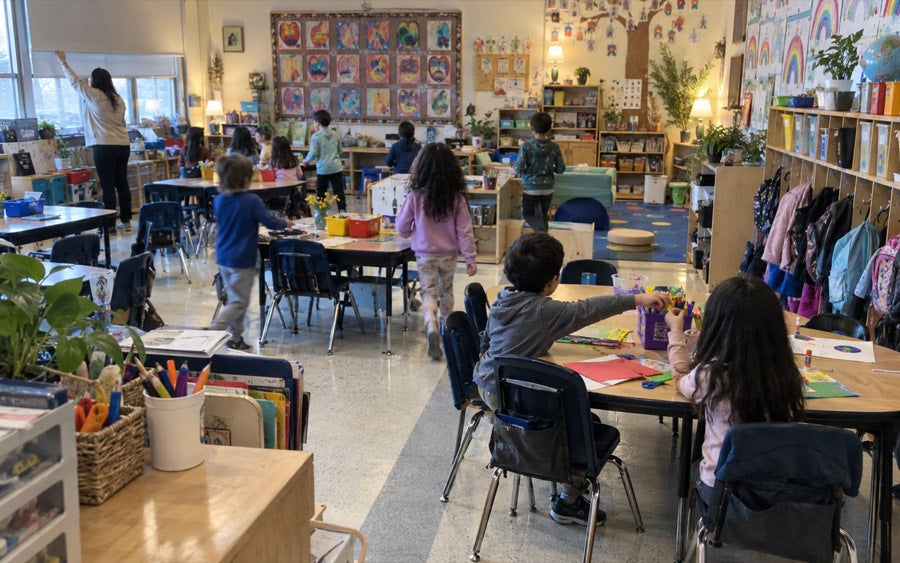
In a classroom the rules around the corner do more work than the corner. Decide them with the class, before anyone needs it.
You need to see a child in it without the class watching them. A back corner away from the door and the bag hooks usually satisfies both.
A card on the desk, a hand signal, a laminated pass. Anything that does not require a sentence from a child who has run out of them.
Five minutes, a sand timer, then a task waiting at their table. Coming back needs to be as scripted as going, or returning becomes the hard part.
Every child visits once in the first week. A space only one child uses turns into a label they carry around the room.
Not a time-out, not a consequence, not logged. If it appears on a behaviour chart, children stop asking for it and you lose the early warning.
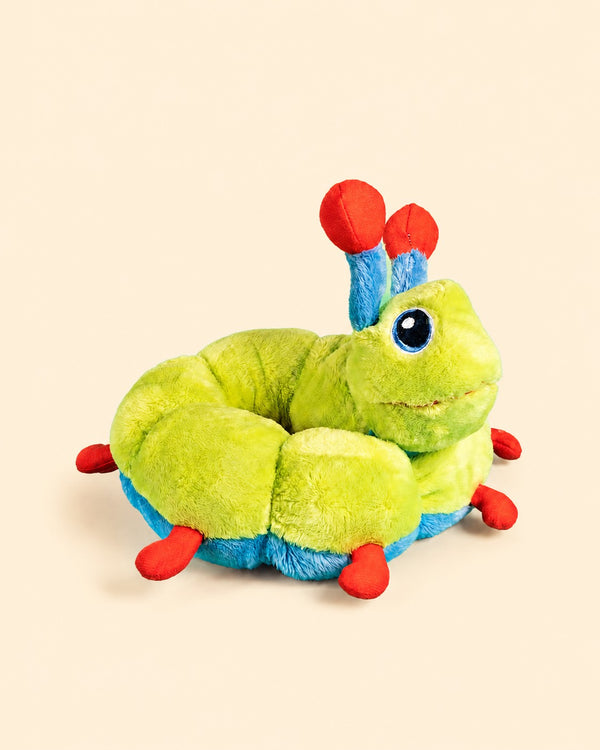
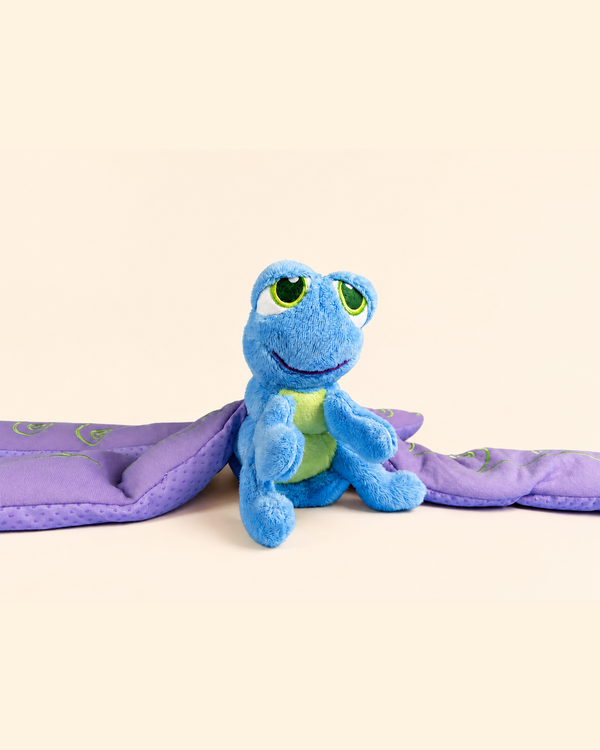
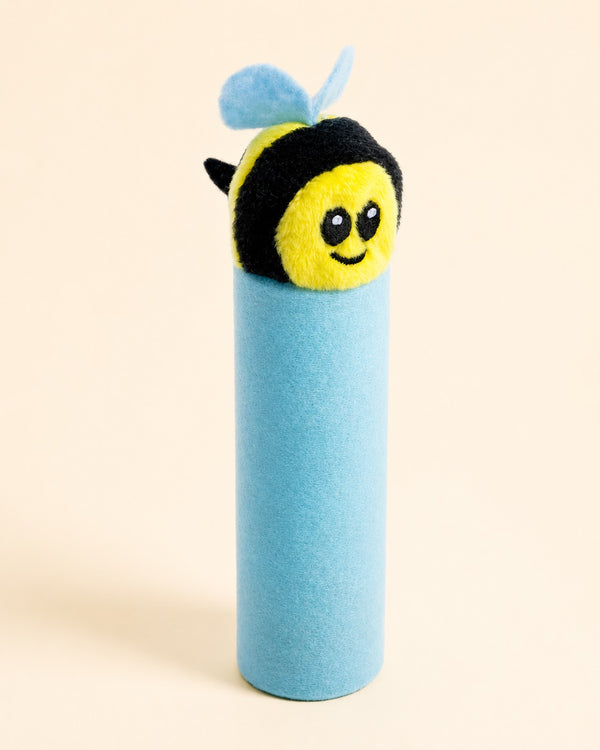
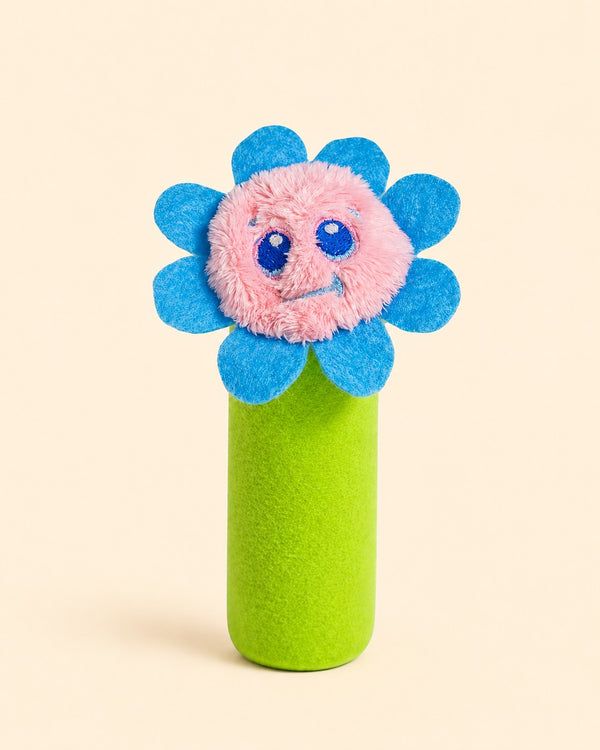
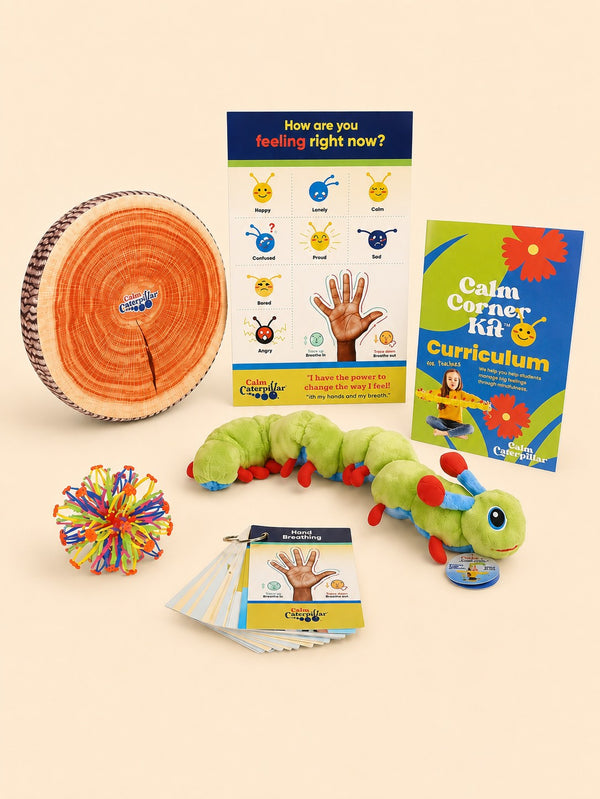
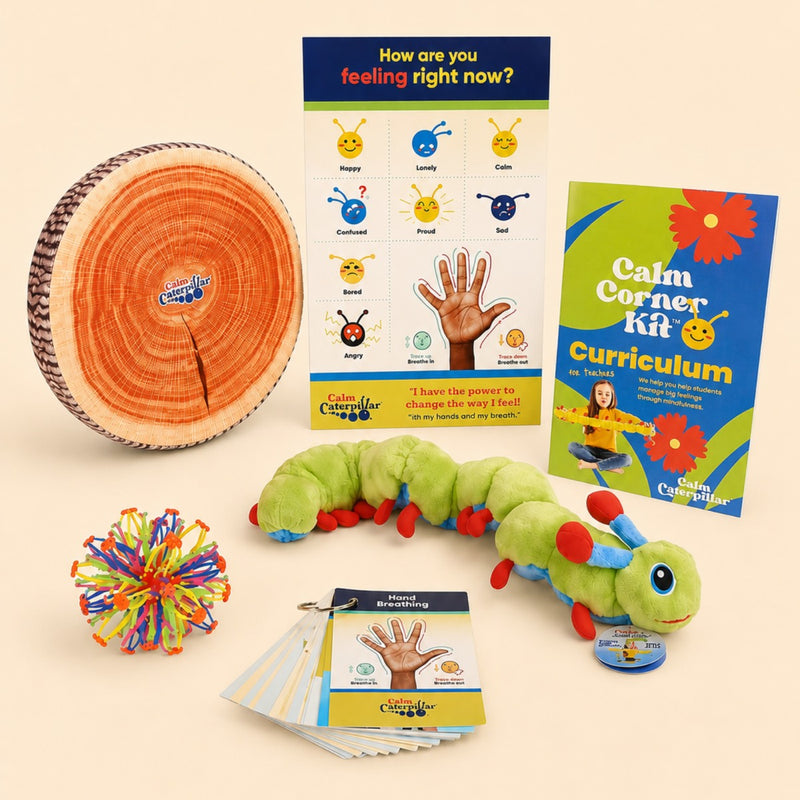
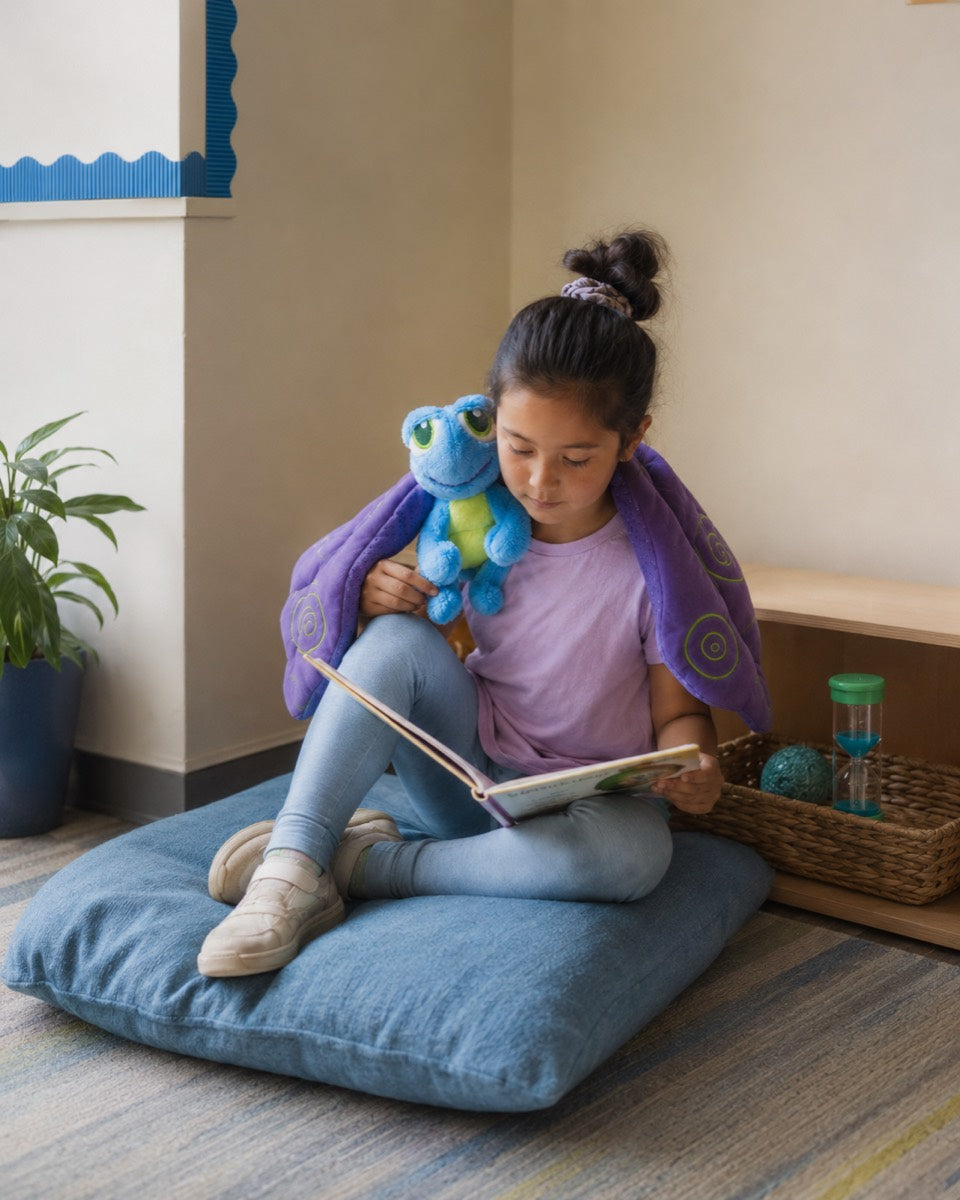
Four jobs to cover: somewhere to sit, something for deep pressure, something to follow for the breath, and something to keep the hands busy. Most of it is already in the house or the store cupboard, and a corner with four right things beats one with twenty.
A rug, two cushions from the sofa, a basket holding one weighted item and one breathing tool, and a card on the wall showing what to do. Everything above that is comfort, not function.
The cheapest version that works
You do not need a kit to start. Build the smallest version this week, use it on ordinary days, and add to it only when the corner has proved it gets used.

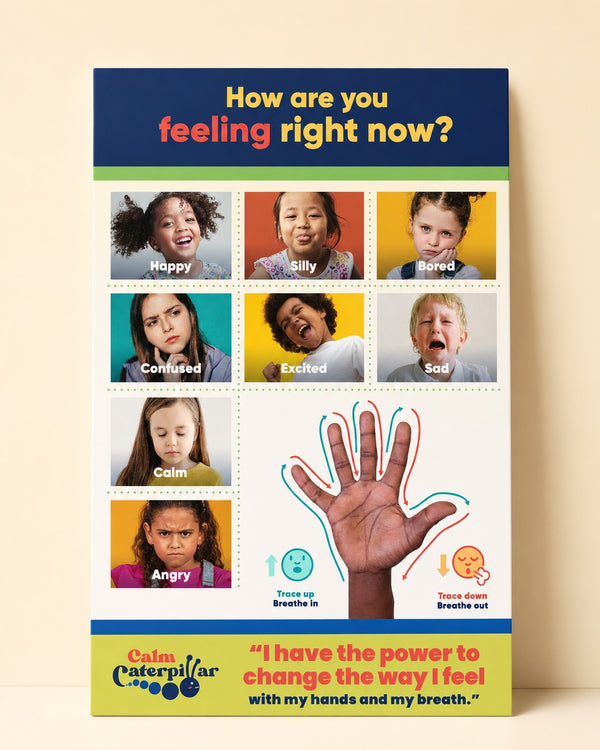
Each one covers a different job: a place, weight, and a way to choose.