




Guide · 8 min read · Written by the Calm Caterpillar team
The school morning, minute by minute.
A practical account of where school mornings actually break, what to move to the night before, what to say at the door, and what to do on the mornings none of it works.
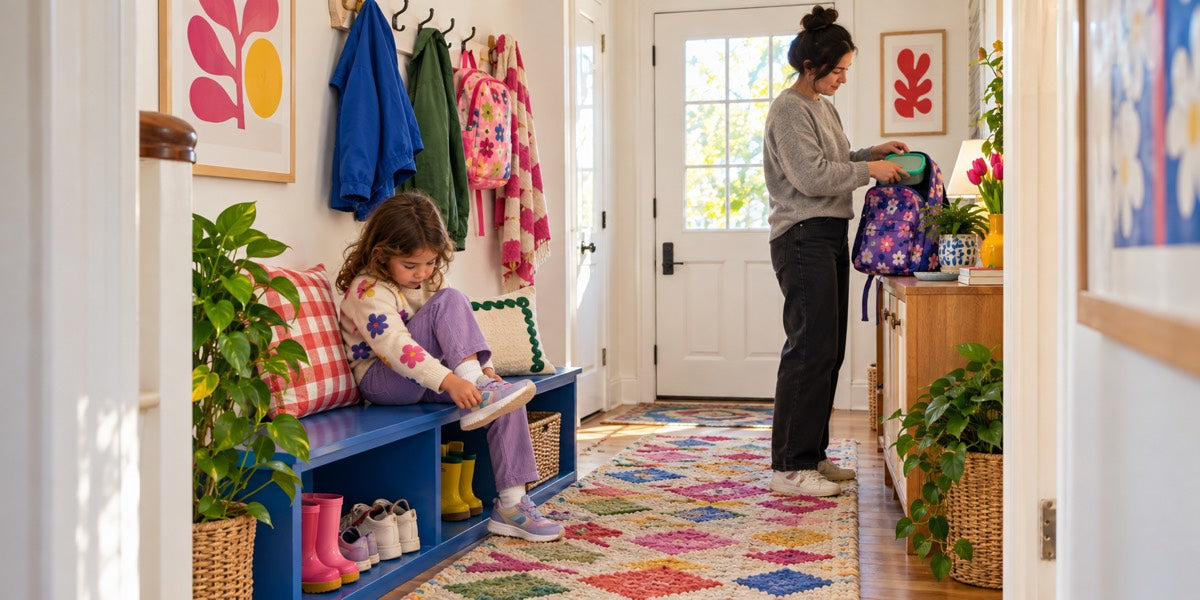
A school morning asks a child to do four hard things in forty minutes: wake up, change state, leave a familiar place, and separate from the person they feel safest with. Adults do that on autopilot. Children under about eight are still learning each part, and a child who processes sensory information differently may be working on all four at once.
What breaks, and when
If you keep notes for a week, most families find the morning does not fail evenly. It fails at the seams — the moments where one activity has to stop and another has to start. Getting out of bed. Turning off a screen. Leaving the table. Putting on shoes. Walking through the school gate. Very little goes wrong in the middle of an activity; almost everything goes wrong at the joins.
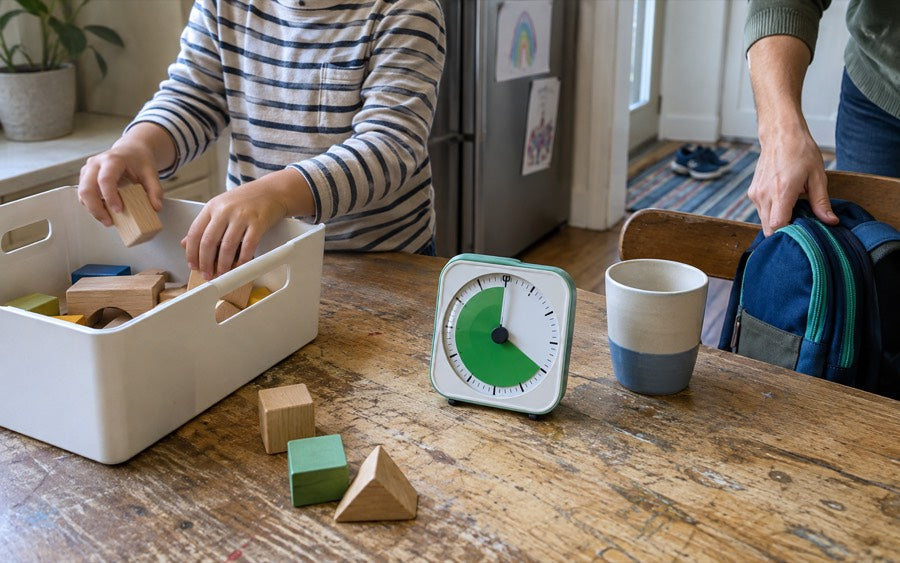
This matters because it tells you where to spend your effort. Adding more encouragement in the middle of breakfast does nothing for the fight that starts when breakfast ends. What helps at a seam is warning, sequence, and something physical to do while the change happens.
The second pattern worth knowing: the morning is a stack. Each unfinished thing carries into the next. A child who woke at 6:10 after a bad night, who could not find the right socks, and who was rushed through breakfast does not arrive at the front door at zero. They arrive already carrying three things. The goodbye that looks like an overreaction is usually the fourth thing, not the first.
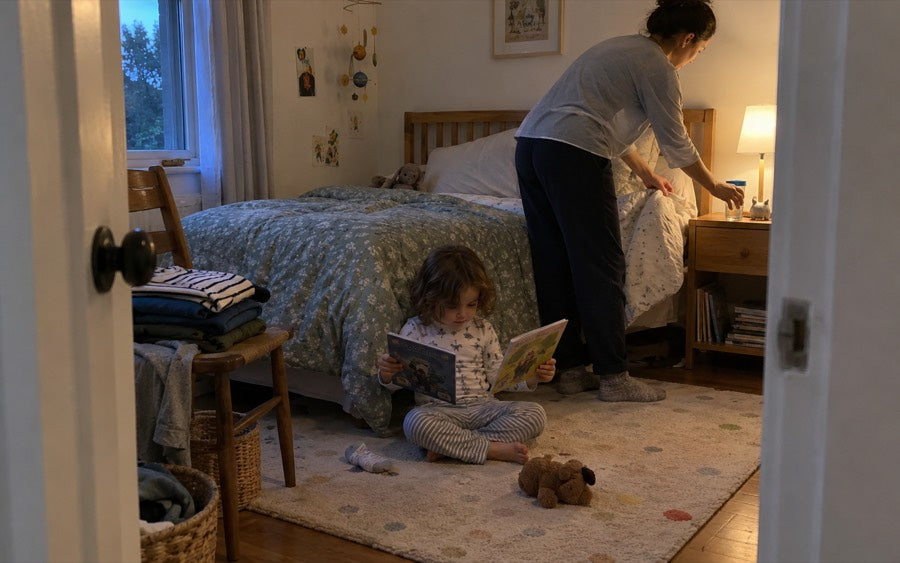
Move the work to the night before
Every decision you make at 7:40 is a decision made by tired people under time pressure. The same decision made at 7:40 the previous evening costs almost nothing. So the first move is not a technique, it is a transfer: take as many choices as possible out of the morning entirely.
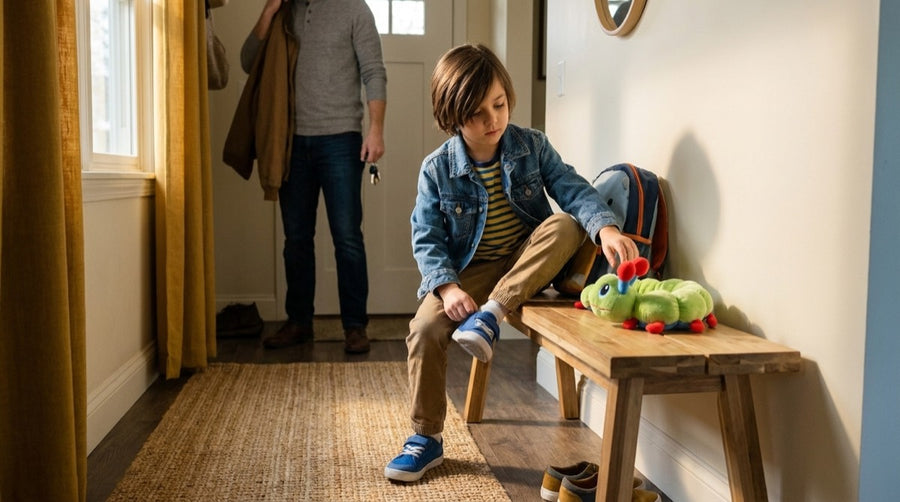
In practice that means clothes chosen and laid out, including socks, which cause more conflict than any other garment. Bag packed and closed. Shoes in one known place. Breakfast narrowed to two options, both of which you are willing to serve. Water bottle filled. Anything the school asked for — library book, kit, permission slip — already in the bag rather than on a counter where it will be forgotten and then blamed on someone.
Let the child do the choosing wherever it is genuinely optional. A child who picked the shirt is far less likely to fight about the shirt. The point is not efficiency for its own sake; it is that a morning with four decisions in it has four fewer places to get stuck than a morning with eight.
Build a launch pad
A launch pad is one square metre of floor or one chair where everything that leaves the house lives. It is the single change most families report sticking, because it removes the search. Nothing gets found in the morning; everything is already in the same place, and the child can see whether it is complete without asking.
Keep the list short enough that a five-year-old can verify it alone: bag, shoes, coat, water bottle, and whatever the school asked for today.
The five-minute wind-up
Leaving the house is a transition, and transitions work better with a run-up. Five minutes before you need to be at the door, stop adding tasks. No new instructions, no reminders about the weekend, no questions about homework. Say what happens next, once, in the order it happens: shoes, coat, bag, door.
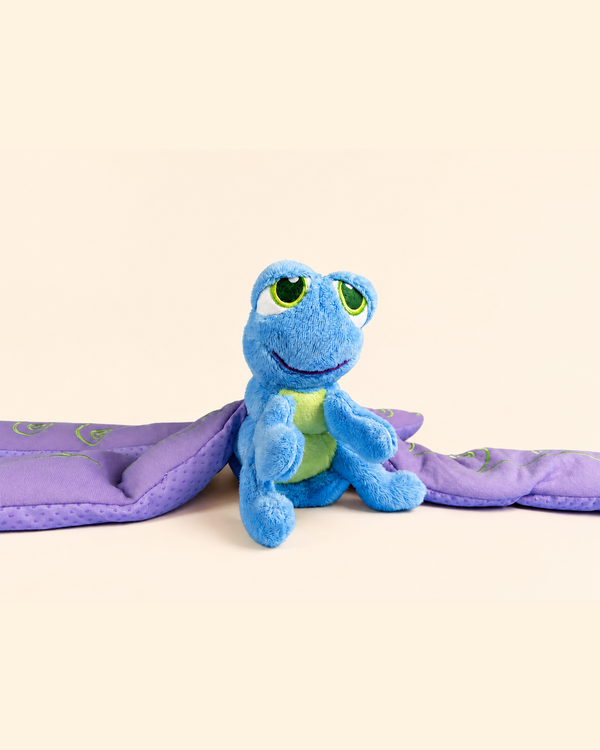
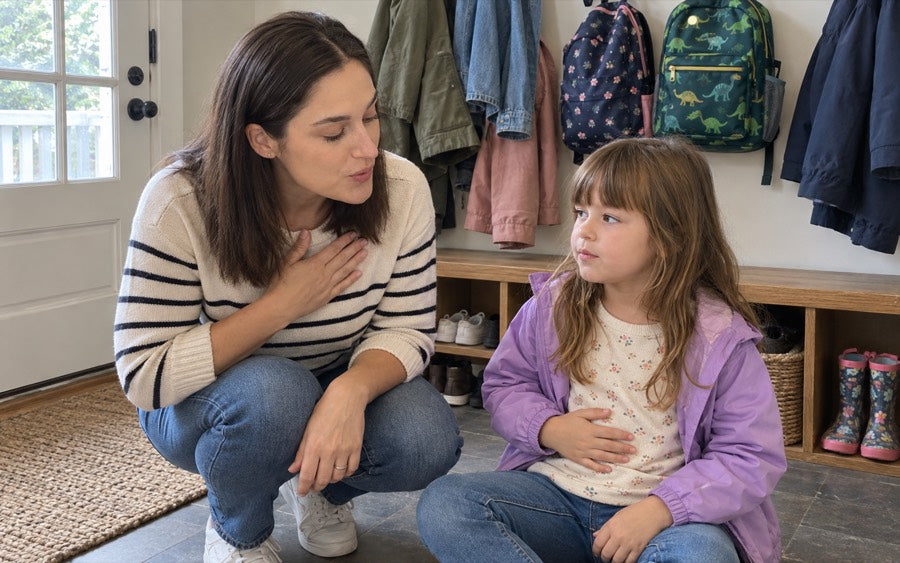
Then give the body something to do. This is the part most morning advice skips. A child who is already overwhelmed cannot absorb another sentence, and adding one usually produces the thing you were trying to avoid. Weight across the lap in the car, a breath they can watch, a squeeze they can count — any of these give the nervous system a job that is not listening.
Keep whatever you choose identical every day. The value is in the repetition, not the object. A routine a child can predict is doing something an instruction cannot: it tells them what is coming before they have to be told. If you want a breath a child can see rather than be talked through, try the three-breath practice first. It costs nothing, and it tells you whether a physical breathing tool is worth buying at all.
The goodbye
Drop-off is its own event, and it follows one rule: short, warm, and the same every time. Length is the variable parents get wrong, usually with the best intentions. A goodbye that stretches communicates that the outcome is still open — that if a child protests a little longer, the leaving might not happen. A goodbye that takes eleven words and ends communicates the opposite, and it does so without anyone having to say no.
Pick a script and keep it. Name what happens, name when you return, say goodbye, leave. Something like: “I’m going now. I’ll be back at the gate at three. Bye.” Then go, even if it looks unfinished, and hand over to one adult rather than two. Two adults coaxing at once doubles the input at the exact moment a child has no capacity for it.
Ask the school how long the crying actually lasted. Most staff will tell you it stopped within a few minutes of you being out of sight, and knowing the real number changes how the next morning feels for you — which changes how it feels for your child.
When it goes wrong anyway
Some mornings will go badly with every part of this in place. A child who is ill, under-slept, or facing something specific at school is not a routine problem. On those mornings the goal changes from a good drop-off to a survivable one.
Three things help. Drop the optional items — hair, the second shoe strap, the reminder about the reading record. Reduce your own words to the minimum; a child in that state hears tone, not content. And keep the ending the same, because the one thing worse than a hard goodbye is a hard goodbye that also becomes negotiable.
Afterwards, do not review it with them at pickup. If something needs discussing, do it on a calm evening, with a specific question rather than a general one: not “why do you get upset in the mornings”, but “which bit is worst — the getting dressed, or the gate?” Children are often precise when the question is.
A hard morning is not evidence that the routine failed. It is evidence that the morning was hard.
What to tell the school
Teachers can do a great deal at the door, but only with information. Keep it to one short note rather than a conversation held in a corridor while thirty children arrive.
Useful to include: what the mornings currently look like, what you have already tried, what settles your child fastest, and what makes it worse. If your child uses a physical tool, say what it is, where it lives, and who may hand it over. Ask for one thing in return — a job at the door, a nominated adult, permission to keep a tool in the tray — rather than a list.
Ask for one line back at pickup about what worked. Parents who only ever hear about the difficult part start dreading the gate themselves, and children read that on the walk in.
The other end of the day
Mornings are often shaped by what happened the previous afternoon. A child who held themselves together through six hours of school arrives home with nothing left, and the fallout tends to land between 3:30 and 5:00. If those hours are consistently hard, treat them as part of the morning problem rather than a separate one.
A short decompression window helps more than questions do: food, no interrogation about the day, and something physical available without being prescribed. Then dinner, then the ten minutes of preparation that make tomorrow morning shorter. That is the whole loop — the night before is the morning, and the afternoon is the night before.
None of this stops hard mornings happening. It reduces how many of them there are, and it gives a child something to do inside the ones that still come.
Tool note
Try the free version before you buy anything.
If you want a breath a child can see rather than be talked through, start with the three-breath practice. It costs nothing, and it tells you whether a physical breathing tool is worth buying at all.
Take the routine strip, the door script, and the handover page.
Three pages, printed once, stuck at child height. The handover page is the note to give a teacher or childminder. One email with the pack, then about two a month.